

I’ve been working on this article for about a year. Some of the paragraphs, are taken straight from the second edition of the Right-Wing Progressive manifesto which may or may not be published as a standalone book.
Introduction
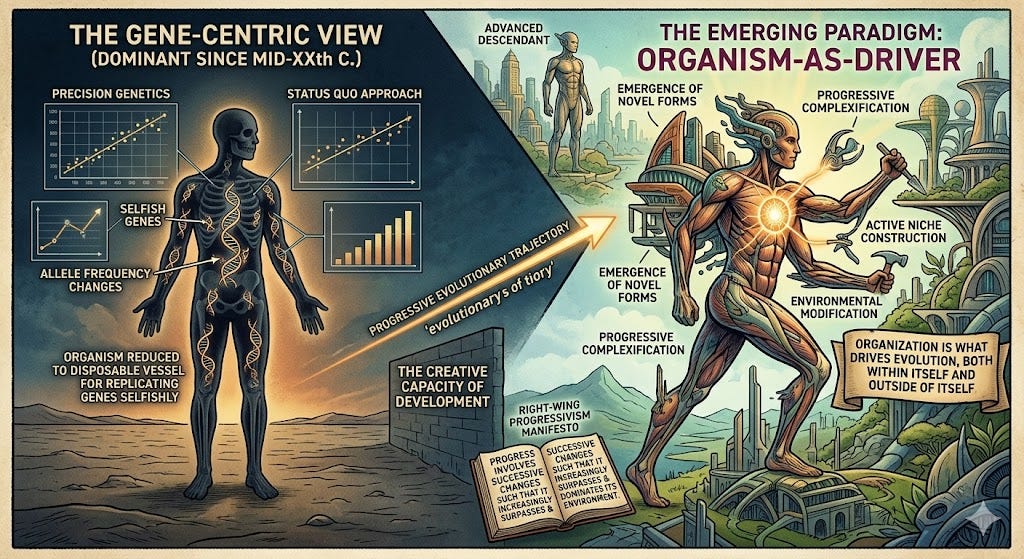
The dominant paradigm in evolutionary biology since the middle of the XXth century has been what we might call the gene centric view of evolution. This paradigm, consolidated in the Modern Synthesis and further radicalized by the Richard Dawkins’ selfish gene metaphor holds that evolution is fundamentally a matter of changes in allele frequencies within populations, primarily through the process of individual selection of the genes. The organism, in this framework, is reduced to a temporary, disposable vessel constructed by genes for the sole purpose of replicating themselves selfishly.
The result is a theory that can describe changes in gene frequencies with impressive precision. It can adequately demonstrate that most of the differences between populations are genetic in origin and are thus not malleable, which is why it’s been an effective tool for right wing and Biorealist argumentation.
However this approach is ultimately a status quo approach, it tells a story of how things are at a given moment but cannot adequately explain the most striking features of evolutionary history: the emergence of novel forms, the progressive complexification of organizational architecture, the creative capacity of development to generate adaptive innovations, and most critically for our purposes the active role that organisms play in constructing, modifying, and directing the very selective environments in which they and their descendants will live or die.
As my Right-Wing Progressivism Manifesto establishes, progress involves successive changes to an organization such that it increasingly surpasses and dominates its environment. It naturally highlights the thesis that the organization is what drives evolution, both within itself and outside of itself.
Back to Darwinism
Darwin himself was an active naturalist who thought primarily in terms of whole organisms: their behavior, their structures, their relationships to conditions of existence. The organisms he observed were active agents, struggling, competing, cooperating, migrating, choosing habitats, building structures, modifying their environments. For Darwin, evolution was fundamentally about what organisms do and how what they do affects their chances of surviving and reproducing. Darwin did not know of the existence of genes and with or without them could explain the process of evolution just fine.
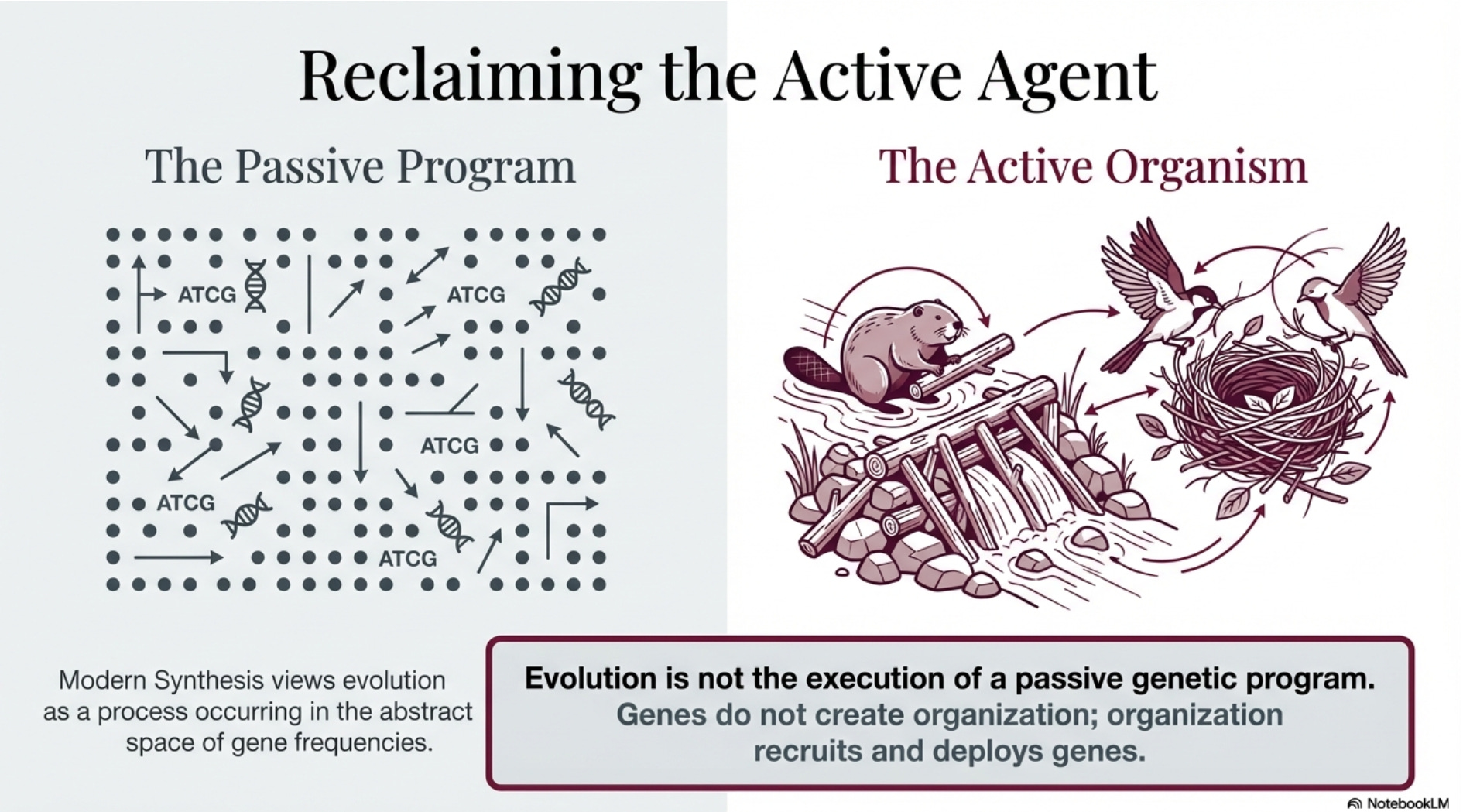
The Modern Synthesis, by contrast, views evolution as a process occurring in the abstract space of gene frequencies. The organism which is actually in charge of actually making selection became irrelevant to the evolutionary process. Selection and populational differences declared to be a product of random gene mutations, as opposed to the rational and sometimes irrational selective choices of the organisms.
If that were true we would certainly expect all traits to be 100% heritable and the genotype to be totally dominating the phenotype, given that humans are simply carriers of their genes, being devoid of agency.
Furthermore, random mutation is undirected by definition. It does not favor functional outcomes over nonfunctional ones. If random mutation were true we would not see continues vertical progress accompanying the process of further optimization of populations at multiple levels of selection. In a case of random mutations, we would not see such a stable and significant differences between and within populations that emerged out of the original differentiation. The creative work must be happening somewhere other than the mutation event itself.
The assertion that the genotype is the ultimate driver of evolution is contradicted by the public fact that DNA has evolved out of RNA which then evolved out of an organism that replicated and changed itself without using genes. That is to say the genotype is the result of the phenotypic evolution by default.
Many of these old unicellular forms are present within ourselves and function independently of DNA, as Stuart Newman has demonstrated, cellular pattern formation, mediated by released morphogens interacting with biochemically responsive and excitable tissues, draws on inherent self-organizing processes in proto-metazoans to transform clusters of cells into animal embryos and organs.
In other words, organism development is not the execution of a genetic program but a constructive, context-sensitive, self-organizing process in which the organism actively builds itself in dialogue with its circumstances. Genetic evolution, while facilitating innovation, serves a consolidating role rather than a generative one, capturing and routinizing morphological templates that originated in the self-organizing dynamics of the organizational development. Genes do not create organization; organization recruits and deploys genes.
Phenotype As The Driver of Evolution
Right after I published my Right Wing Progressive manifesto, I stumbled upon a book that confirmed much of my critiques of modern evolutionary science at the time when I did not possess the proper scientific language required for expressing them.
The book is called Developmental Plasticity and Evolution and its written by Mary Jane West-Eberhard and her thesis is that evolution typically begins not with genetic mutation but with environmentally initiated phenotypic change. Gene frequency change follows, as a response to the developmental change.
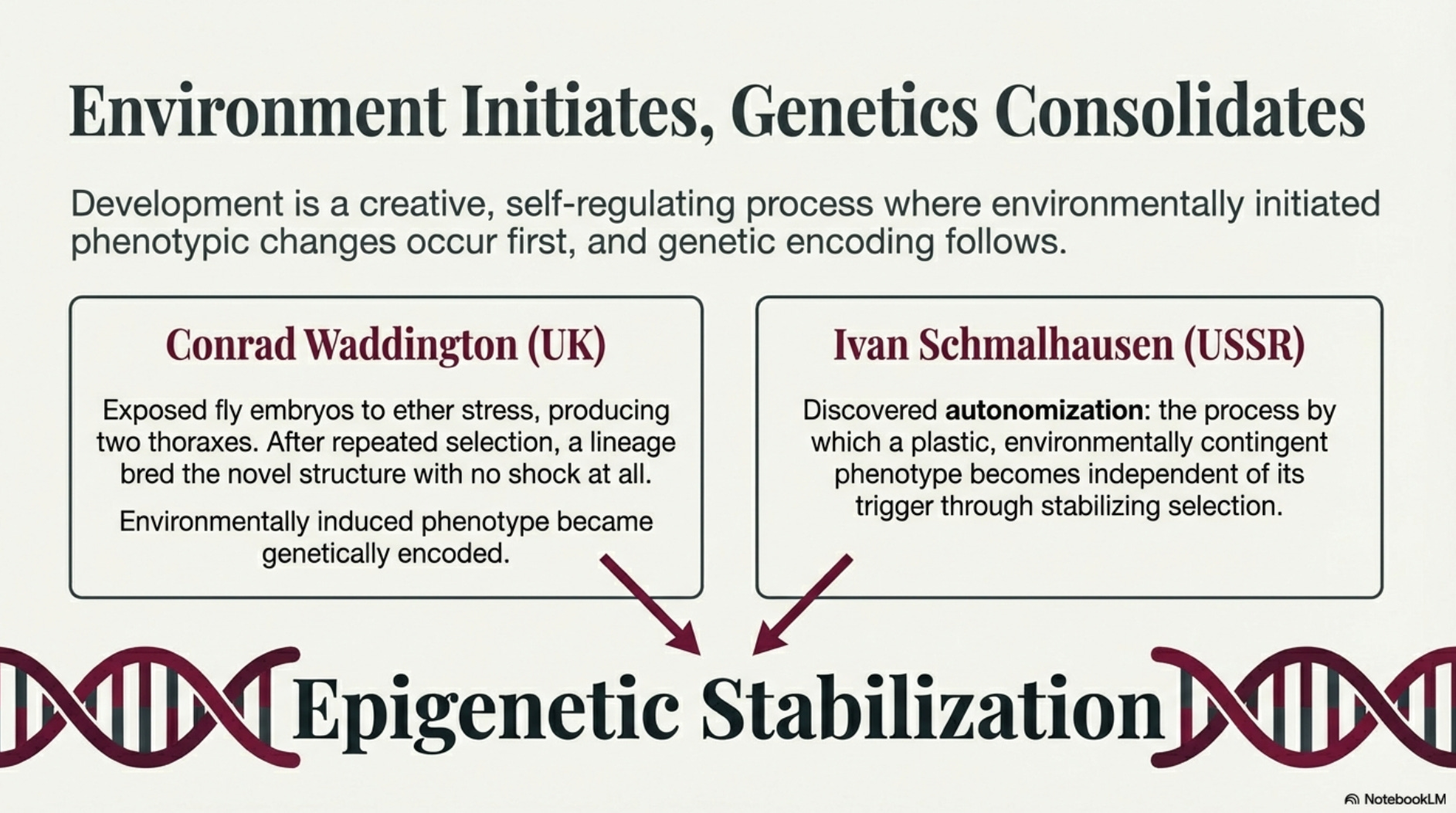
Consider the examples of Waddington’s flies and Ivan Schmalhausen’s stabilization:
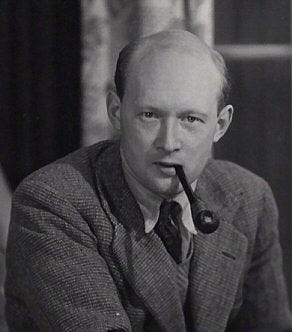
Conrad Waddington exposed fly embryos to extreme ether stress, producing some individuals with two thoraxes. After repeated selection of bithorax individuals in progressively less severe conditions, he bred a lineage that produced the unusual structure with no ether shock at all. An environmentally induced phenotype had become genetically encoded. Not because new mutations arose, but because existing genetic variation was selected to lower the threshold for a developmental response that plasticity had already made possible.
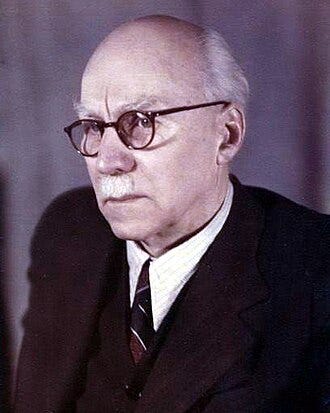
Ivan Schmalhausen, working independently in the Soviet Union, arrived at the same mechanism from a different angle. He called it autonomization: the process by which a plastic, environmentally contingent phenotype becomes progressively independent of its environmental trigger through what he termed stabilizing selection.
Both researchers, from opposite sides of the Iron Curtain, converged on the same insight: development is not a passive readout of genetic instructions. It is a creative, self-regulating process, and the novelties it produces can become genetically entrenched after the fact.
Like everything else, it also works with humans. About 10 years ago a study found that the children of Holocaust survivors have inherited/or permanently activated a stress related gene that was not present before.
In modern science this phenomenon is referred to as epigenetics or how one’s behaviors and environment can cause changes that affect the way one’s genes work. It does not make claims that the phenotype changes the genotype in a Lamarckian fashion, but that the phenotype and the genotype exist in parallel with the organism.
The genes may randomly recombine as many times as they’d like, but their activation and rearrangement (as well as future recombination) is at the hands of the phenotype.
Mary Jane West-Eberhard introduces two concepts that clarify how phenotypic change can lead evolution. The first is phenotypic accommodation: the immediate adaptive adjustment of the phenotype to a novel trait or trait combination. When a developmental novelty arises—through mutation, environmental perturbation, or recombination of existing resources—the rest of the organism adjusts in response. Bones remodel under new mechanical demands, muscles adapt to altered skeletal structures, and neural systems reorganize to support new functions.
This capacity is not peripheral but foundational to evolvability. Without it, most novelties would be lethal, as other systems could not integrate the change and if each system required its own independent genetic mutations to achieve this coordination, adaptive evolution of complex entities would be practically impossible. This is the organizational action of the phenotype.
The second concept is genetic accommodation: the process by which initially environmentally contingent phenotypes become genetically stabilized. A phenotypic response that is initially triggered by environmental conditions can, over generations, become increasingly reliable, canalized, and eventually independent of the original environmental trigger. In this process, existing genetic variation is selected to modify the threshold, timing, or form of the developmental response, but the phenotypic novelty itself—the innovation—originated in the plastic developmental response, not in a genetic mutation.
If I were to make a highly educated guess (that is foundational to my theory) eventually this becomes the default way a gene is read, that is to say, epigenetics stabilize and simply turns into genetics. Here is a small worded diagram:
Environment → Phenotype → Epigenetics → Genotype Change.
TLDR: She correctly pointed out that genes are more like followers than leaders in evolutionary change. The phenotype IS the driver of evolution but it still treats the organism primarily as a developmental system responding to perturbations, whether genetic or environmental.
She believes that the environment is the main driver of these changes. Yet I view the environment as simply a powerful incentive machine, the main driver of the change is the organization itself which exists in a symbiotic (or as I write synotic) relationship with the environment. In a progressive understanding of this phenomenon, the organization creates the environment around itself through niche construction (more on that later) and ultimately overcomes it at the end. So, if I were to redo the diagram, here is how it would look like (it is non-linear as you can see and goes back to where it started just at the higher level of itself with each iteration, but the crucial aspect is the fact that genetic memory and coding systems have evolved from the phenotype):
Abiogenesis/Environment → The Phenotype → RNA-life form → DNA-life form → Environment →
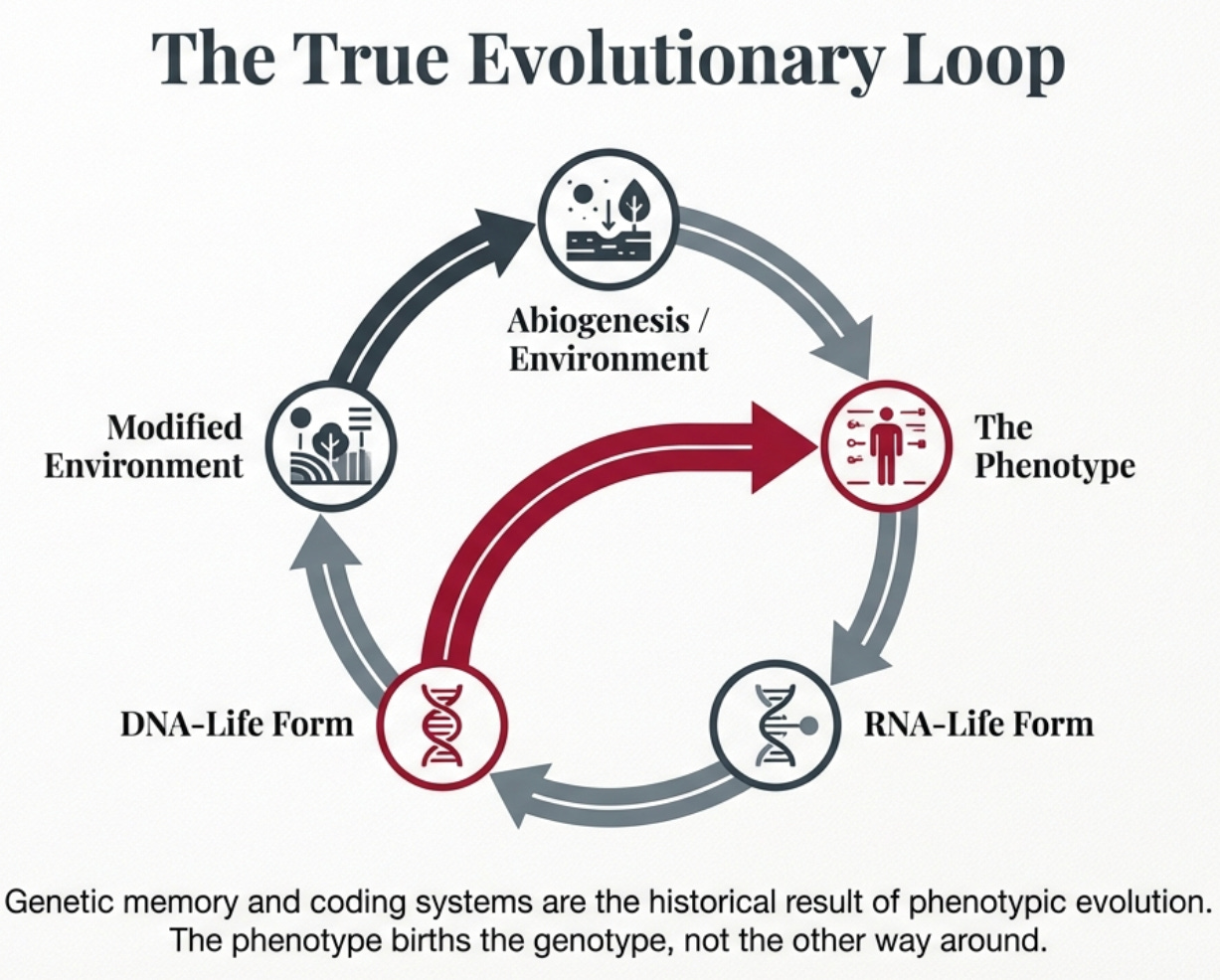
[The AI butchered the diagram. Abiogenesis relates to the original source of life and should be cut from the diagram.]
In an alternative form:
Environment → Phenotype → Genotype → Phenotype → Environment→
The process by which an organism is overcoming the environment, as I write in my manifesto is through vertical selection, or innovation of a new organizational mode that increases the relative agility of the organism in relation to the environment. It is in that state, that the organization becomes the driver of progress, it produced an innovation which elevated itself above the environment and then than follows by a horizontal progress, or the assimilation of the innovation (or its counter) across the environment.
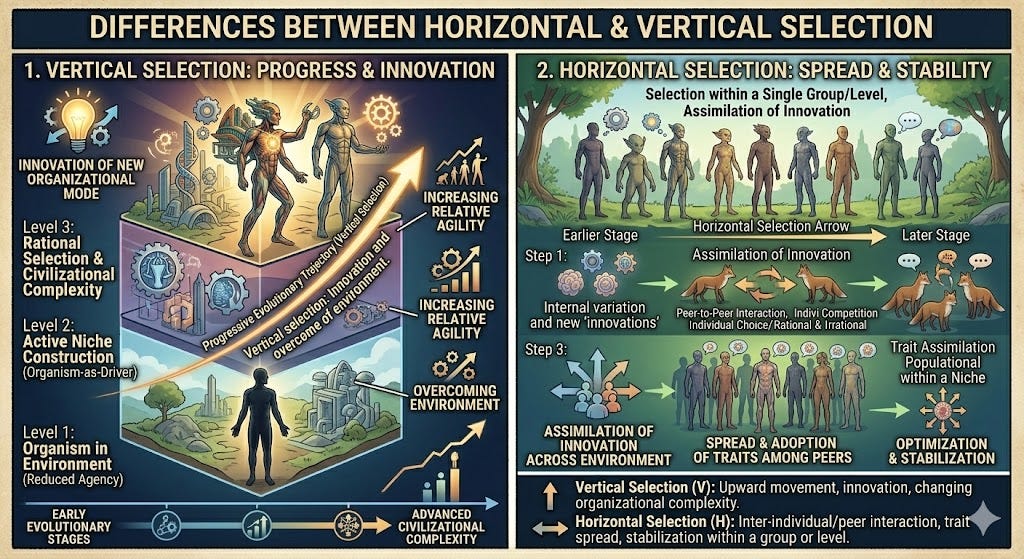
That is to say the phenotype is not simply in the driver’s seat of its own development in relation to the environment - it is in the driver’s seat of its own selective environment. What is missing from Mary is the full recognition that the organism is not merely a responsive system but an active agent: an organization that does not simply accommodate to environmental change but actively constructs, modifies, and directs the environmental conditions under which it and its descendants will be selected.
This is the crucial insight that transforms West-Eberhard’s developmental plasticity framework into a fully agent-centered theory of evolution—and it is this agent-centered theory that provides the biological foundations for the Right-Wing Progressive understanding of organization, evolution, progress, and selection.
Progressive Evolution
As Kevin Laland, John Odling-Smee, and Marcus Feldman have demonstrated in their work on niche construction, organisms do not merely adapt to environments; they in part also construct them. Organisms regularly choose their own habitats, mates, friend circle, construct important components of their local environments such as nests, holes, hierarchies or the internet. Through these activities, organisms modify the natural selection pressures to which they and their descendants are exposed.
When organisms modify their environments in consistent ways across generations, because each individual inherits the same genes causing it to do so, or because each individual learns the same behaviors from conspecifics—these environmental modifications become a persistent source of selection.
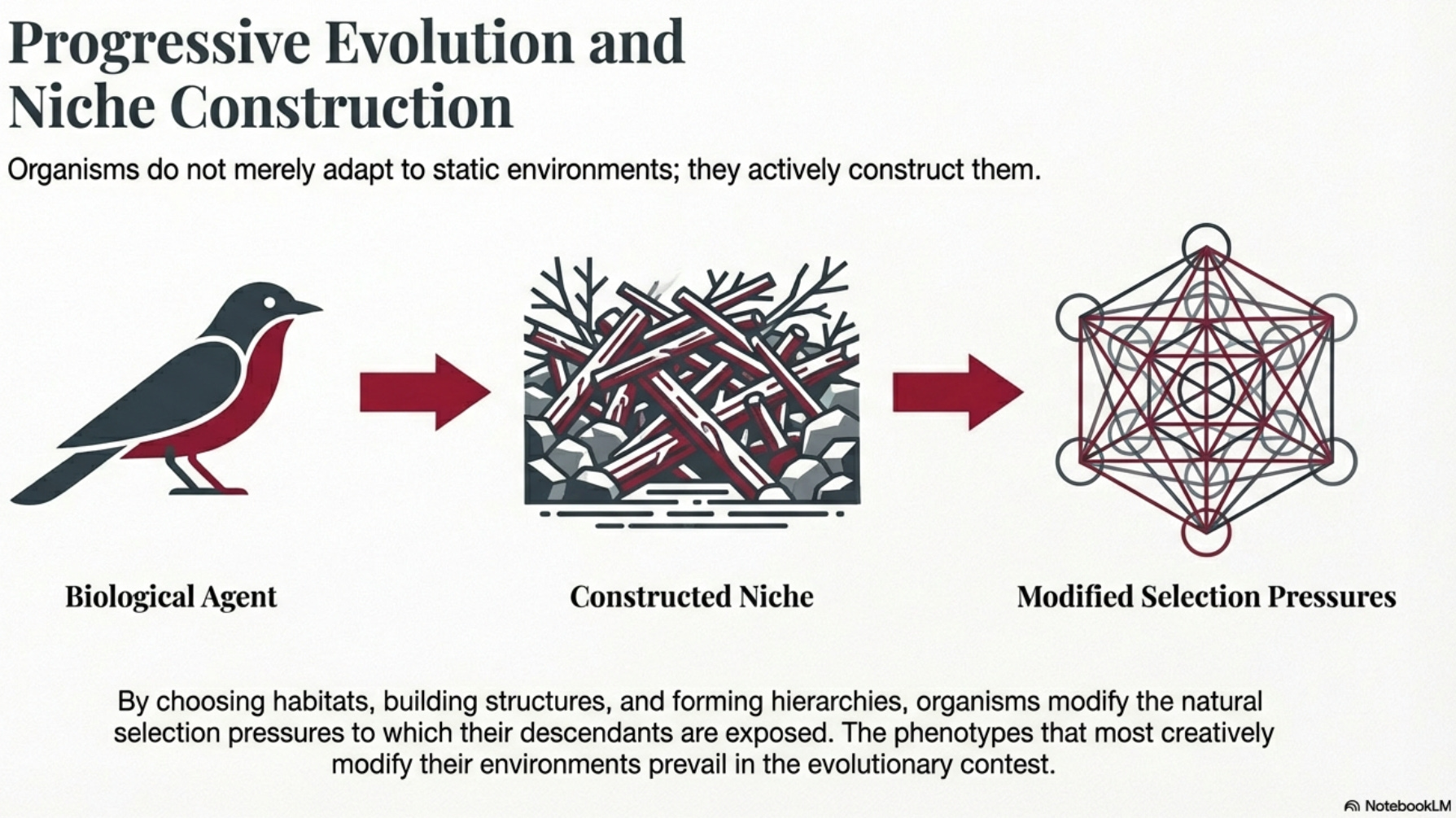
The phenotypes that most effectively organize their own development, that most creatively modify their environments, that most successfully construct niches for themselves and their descendants - these are the phenotypes that prevail in the evolutionary contest. Furthermore, those who construct niches, which successfully attract other agents become leaders of that particular niche.
While universal in the animal world, it reaches its most extreme expression in humans. Culture is a form of niche construction and it is operating faster than genetic selection, and capable of reshaping the biological selective environment on a civilizational scale. At the human level, the organism that is subject to natural selection becomes an organism capable of exercising rational selection which in turn speeds up the evolution much faster.
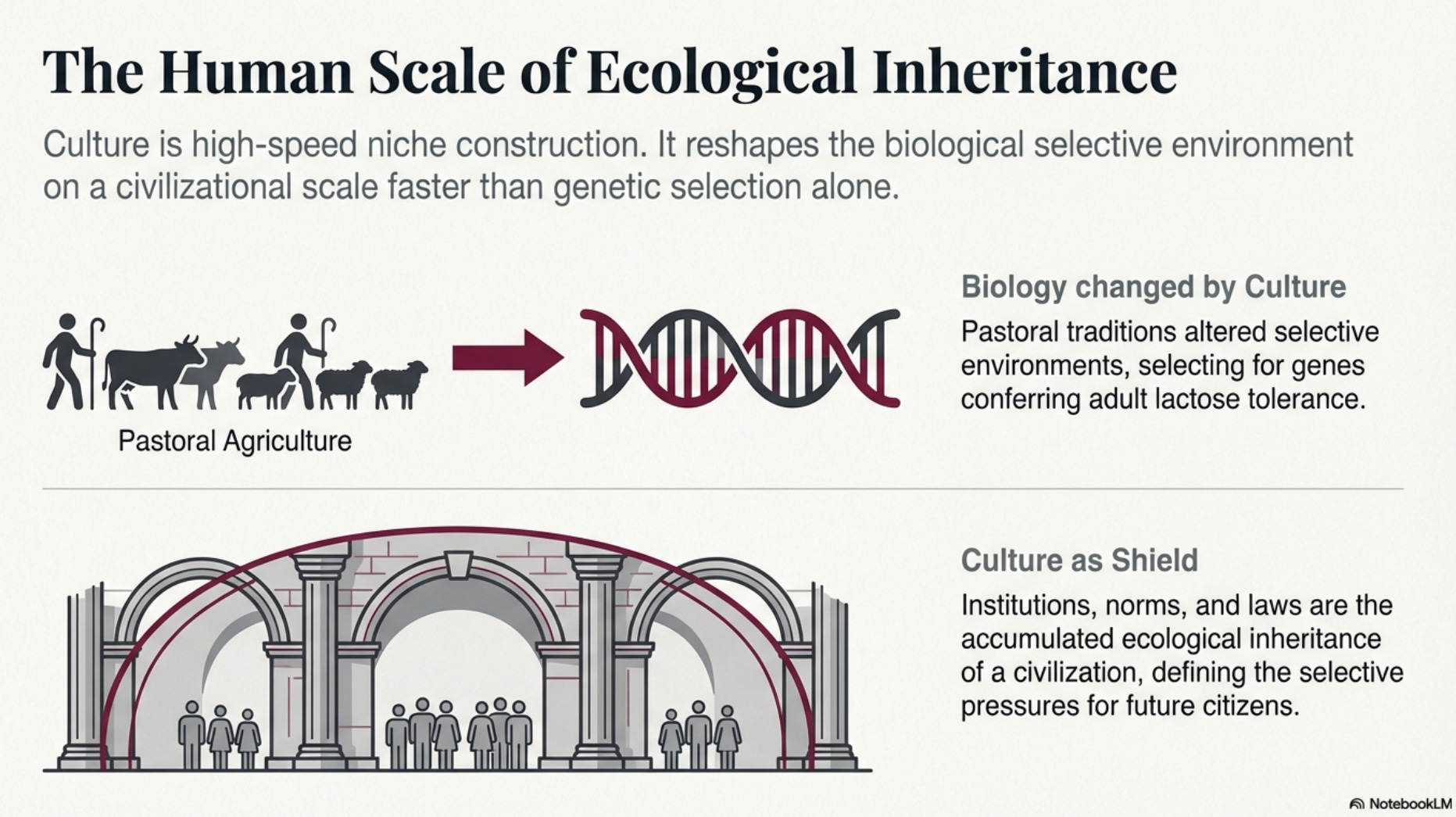
The culturally inherited traditions of pastoralism have altered the selective environments of some human populations for sufficient generations to select for genes that today confer greater adult lactose tolerance. Race realists like to bring up the sickle-cell anemia argument, and more profound readers of modern sociobiology books like to make the case that institutions, norms, laws, and cultural practices of a civilization represent the accumulated ecological inheritance of generations of human niche construction. And just as the quality of ecological inheritance affects the selective pressures acting on future generations of organisms, the quality of civilizational inheritance affects the selective pressures acting on future generations of citizens.
Progressive evolution creates a positive feedback loop in which the evolution of agency and the evolution of the environment drive each other to ever-higher levels of organizational complexity and for as long as this was the case in our society right now I wouldn’t have bothered creating an ideology explaining how we have organizationally backtracked from the early and mid XXth century.
Here is the basic loop of how it works:
Organism behavior modifies local environment → Modified environment alters selection pressures → Altered pressures favor traits that fit the new environment → Those traits spread through population → Population with new traits modifies environment further.
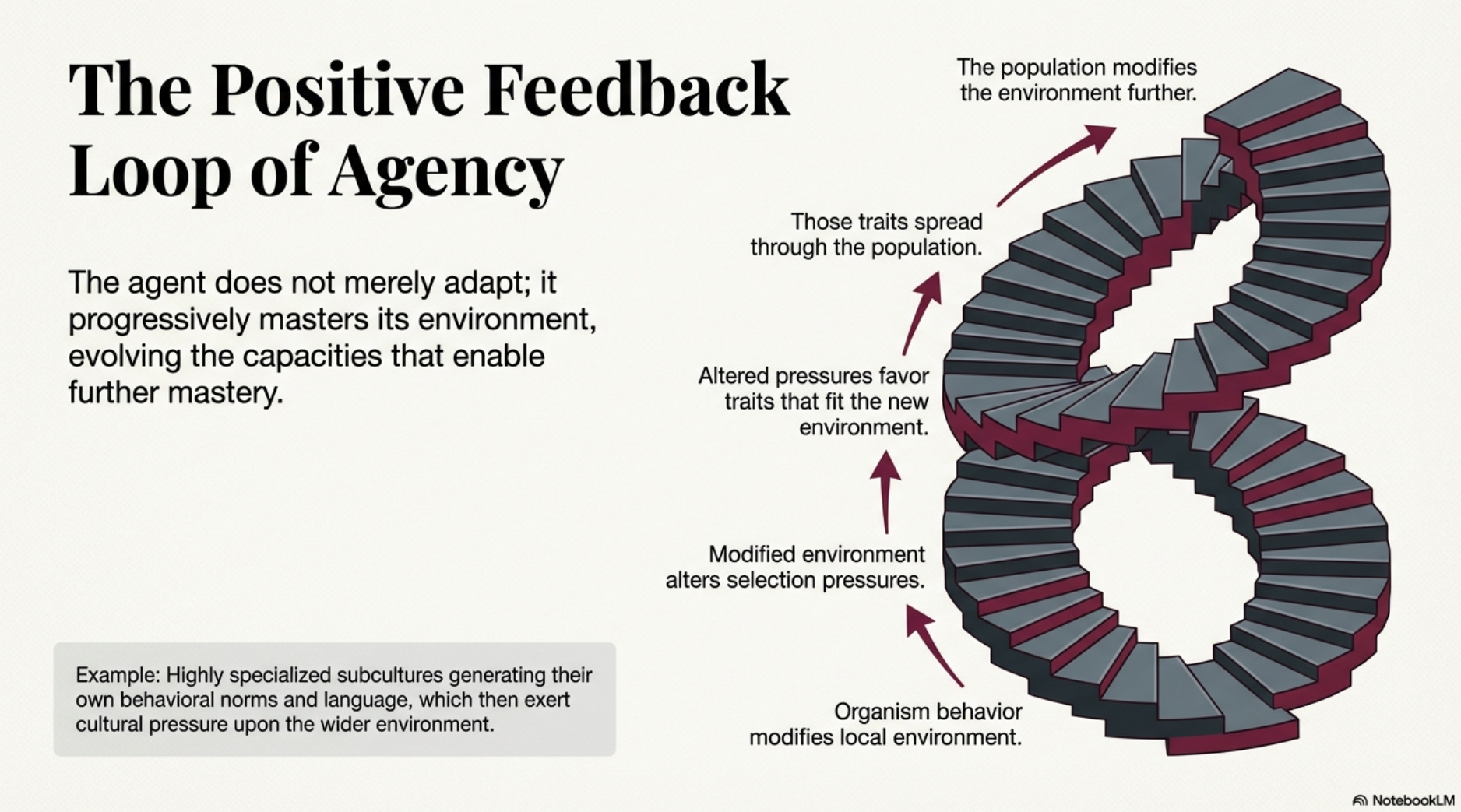
Think of a simple phenomenon like the looksmaxxers community and how it has its own behavioral norms, specific coded language and how much cultural pressure it exerts upon the rest of the internet. It is a story of how a niche grew so powerful that it proceeded to modify the environment beyond that niche.
But at any rate, the agent proceeds niche construction because niche construction itself is the work of the agents engaging in specialization. The agent is constructing a specific niche among many primarily due to his own organizational will, because doing one thing over another is a phenomenon of selection.
The agent does not merely adapt to its environment; it progressively masters its environment, and in mastering its environment, it evolves the very capacities that enable further mastery. The phenotype gets into the driver’s seat not by a single revolutionary act but through a progressive ratcheting of agency and environmental modification that, over evolutionary time, transforms the relationship between organism and environment from one of passive submission to one of active direction.
The final manifestation of this organizational will to power is the practice of eugenics, or the rational/artificial selection of the genotype by the phenotype.
It differs from previous modes of selection by its conscious awareness of what it’s doing. Eugenics whether practiced traditionally through mate selection or whether practiced now through embryo selection for specific traits represents the dominion of the phenotype over the genotype. It gives the phenotype the proper tools and power to properly design the generic makeup of its next generational manifestation.
Unlike selective processes of the past, it is independent of the environmental constraints and can be best described as a form of organizational based assembly of an ideal version of itself. This is where Alexander Bogdanov’s tektology comes into play.
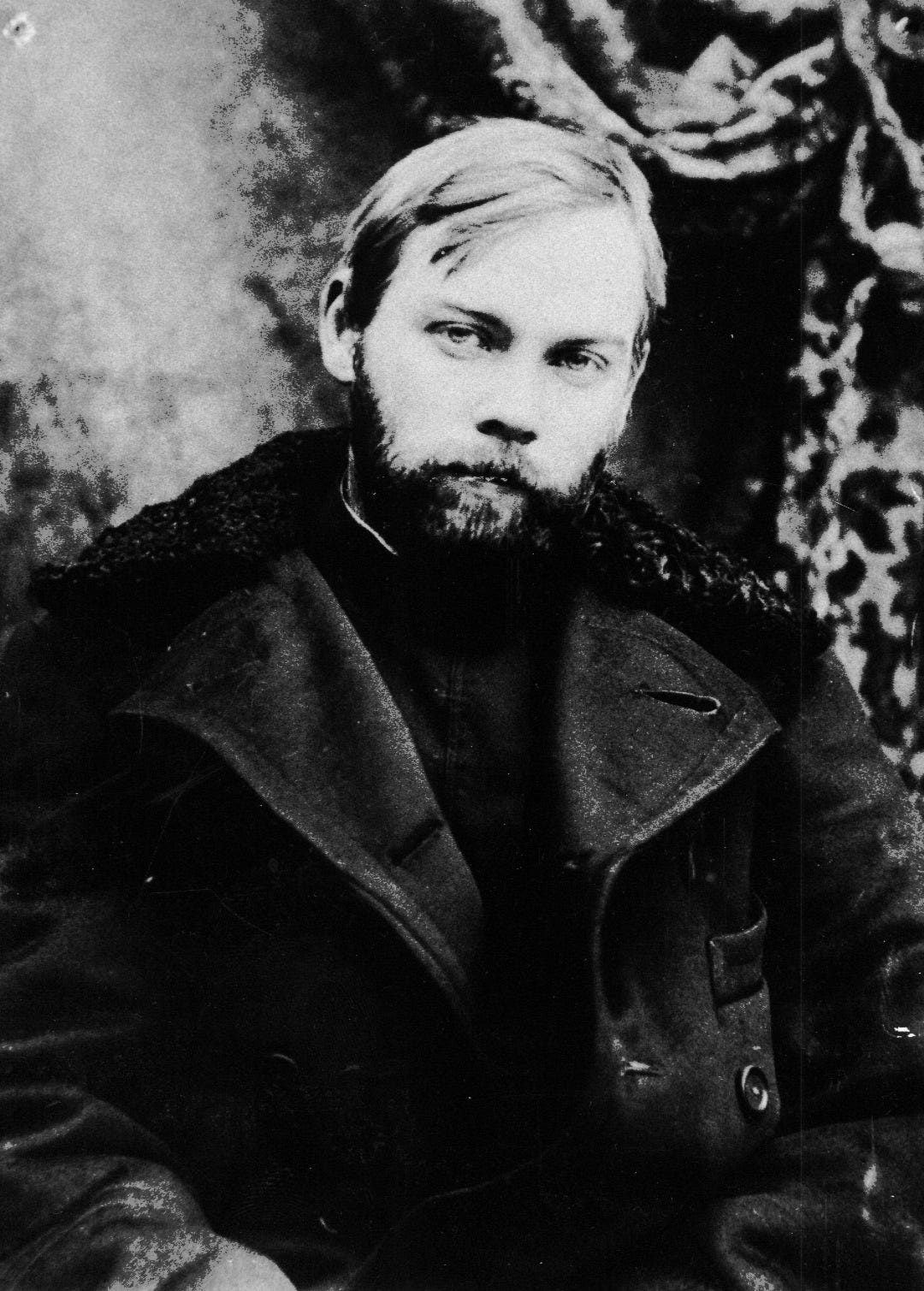
Where Darwin’s selection, shaped as it was by the Malthusian metaphor of struggle for existence, emphasizes competition and survival of the fittest individual, Bogdanov’s assembly (podbor) means something closer to assembling or fine-tuning: the universal mechanism of the construction of any organization and its expediency.
This distinction is not merely semantic. It reflects a fundamentally different understanding of how organized systems come into being and evolve. For Darwin, organization is an incidental by-product of the competitive sifting of random variations. For Bogdanov, organization is the fundamental process itself, the creative assembling of elements into an expedient unity through the concordance of its parts.
And it is precisely the creative assembly by the phenotype which gave rise to the DNA that had ingressed the previous replication system into itself. And much like that, a new and more complex replication system will function on the skeletal structure of the DNA.
Much like societies become endlessly fine tuned in a utopian state, modern eugenics takes place without struggle for existence, but as another consumer based decision aimed at intergenerational self-improvement and with that improvement there will eventually emerge a more optimized version of coding and replicating.
Embryo selection, coupled with Artificial General Intelligence, will ultimately liberate humanity from environmental constraints and place our destiny firmly in our own hands.
The Dialectic of the Genotype and the Phenotype
We have established that the phenotype—the organized, living, acting complex—is in the driver’s seat of evolutionary change. The organism, through its developmental plasticity, its niche-constructing activities, and its active environmental modification, initiates the evolutionary innovations that genetic evolution subsequently consolidates. But this phenotypic primacy must be understood dialectically, not as an absolute negation of the genotype’s role but as a dynamic interplay in which each term conditions and transforms the other. As a form of a symbiogenesis of two mutually dependent elements into a single whole.
Here we arrive at a paradox that is central to the Right-Wing Progressive understanding of biological politics: the phenotype is the driver, but it is also temporary for the genotype can exist without the phenotype (albeit as a non-living code which decays) whereas the phenotype can exist without the genotype only at the most primitive life forms like prions. And so perhaps the genotype is primal in the sense of being the thread of continuity that links the generations. The one which stores information without which the phenotype cannot reproduce.
If we apply multi-level selection to this, we could come to a conclusion that while on the individual level, and on the level of progressive evolution the individual phenotype takes upon a primal role, on a collective level the genes win.
Consider what happens to an individual’s genetic contribution over time. A parent transmits roughly half of their genome to each child. A grandparent’s contribution to any grandchild is approximately one-quarter. By the sixth generation, a given ancestor’s contribution to any single descendant is about 1.56%. By the tenth generation, less than 0.1%. By the twentieth, the original individual’s genetic material has been so thoroughly diluted and recombined that it no longer exists as a coherent entity. It has been dissolved into the group’s collective pool.
I have looked at the history of many Russian great families and seen the transformation of political beliefs intergenerationally. A monarchist grandfather yields to a liberal reform-minded son, who yields to a revolutionary grandson, who yields to a Soviet functionary great-grandson, who yields to a post-Soviet capitalist great-great-grandson.
You can view this as an argument for why political views are more environmental than genetic and you could also view this as an argument for why at an unstable ecology the phenotype evolves too quickly and because of the pace of permutation, there is never a process of stabilization and therefore adequate transmission into the next generation.
Personally, I view it as the supremacy of the collective over the individual within multi-level selection. The individual organism lives for decades and may not always pass on their unique innovation but the gene pool of a population persists for millennia, constantly reshuffled but never entirely broken.
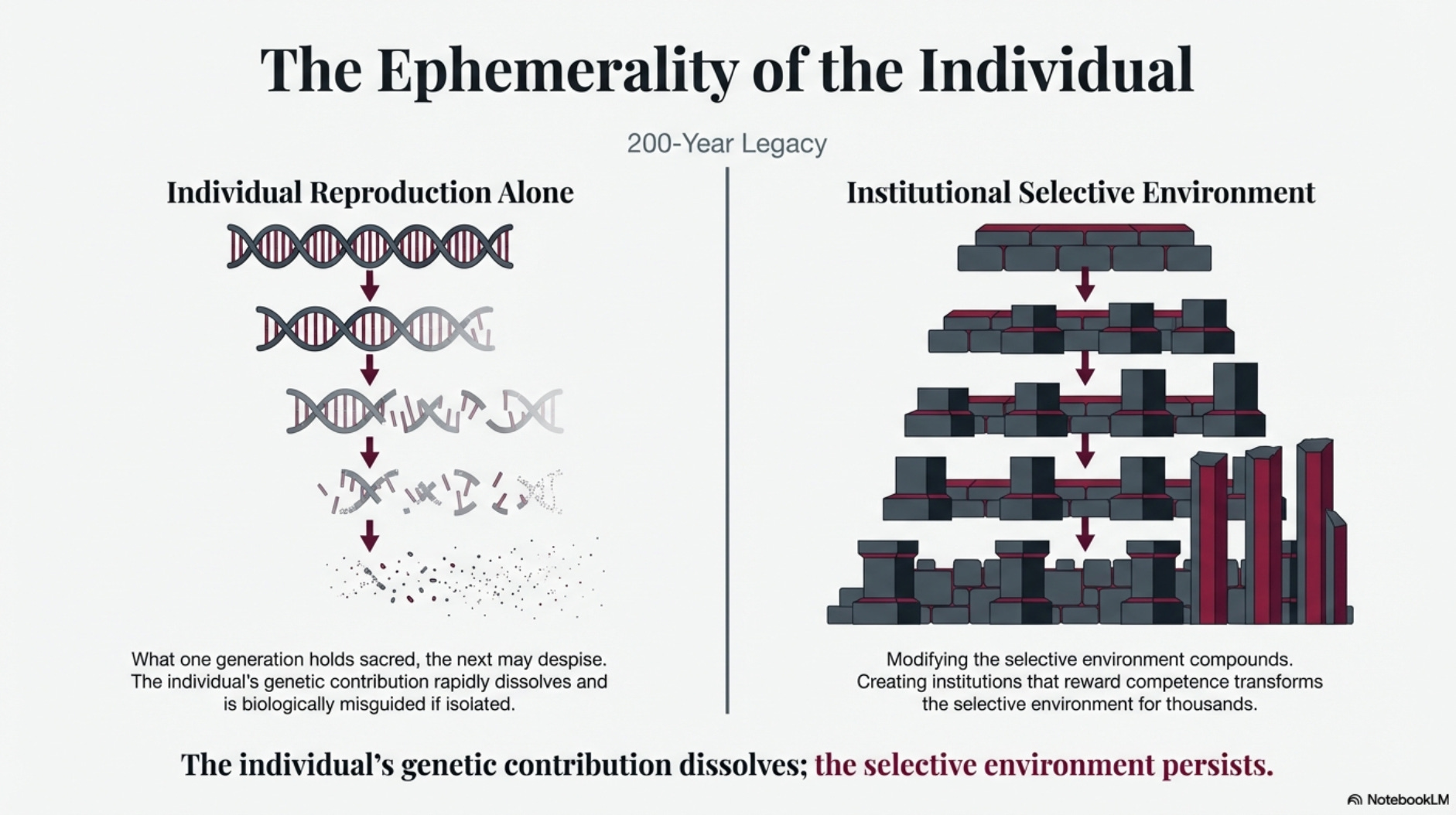
This asymmetry is of the greatest political significance. The Right-Wing Progressive must understand that the genotype exists within a group, not within an individual unit. No individual possesses the full genotype of the race or the nation; each individual carries only a fragmentary, idiosyncratic sample of the group’s total unique genetic heritage. It is the population, in its biological sense, that is the custodian of the genotype.
Place the group on the horizontal axis of symbiosis while the individual on the vertical access that I have invented for the purposes of an improved and modern theory of tektology. The individuals genetic innovation even if he’s highly successful does not not fully dissolve into the gene pool of the group and so eventually a group will break down into multiple groups due to the laws of differentiation, driven by the genetic drift of its various members away from each other, but that is a story for another time.
But until that happens, biological politics must focus not on the individual but on the group as a whole, not on the particular phenotype but on the conditions that shape the production of phenotypes across generations. What one generation holds sacred, the next may despise. What one generation builds, the next may destroy. The only enduring substrate is the group’s genetic heritage and even this endures only if the conditions of selection remain favorable.
The Right-Wing Progressive must internalize this lesson fully. The obsession with individual genetic fitness that characterizes much of the Evolutionary scene is not merely impractical but biologically misguided. The individual’s genetic legacy is ephemeral; only the group’s genetic heritage endures. Political action aimed at preserving and enhancing the quality of the group’s gene pool is therefore infinitely more consequential than any individual’s reproductive strategy. The individual who leaves ten children but contributes nothing to the cultural, institutional, and political conditions that shape the group’s selective environment has accomplished less than the individual who leaves two children but transforms the selective environment for the benefit of thousands.
If we analyze the question in terms of individual impact over 200 years, the individual who left a cultural legacy wins decisively over the individual who left merely a genetic legacy. The cultural legacy persists as a coherent, recognizable, and functionally consequential entity; the genetic legacy has been atomized beyond recognition. This does not mean that genetic continuity is unimportant. But it means that the most effective way to influence the evolutionary trajectory of the group is not through individual reproduction alone but through the modification of the selective environment through niche construction at the cultural, institutional, and political level.
You can read the rest of the article if you become my paid subscriber
