[This is a guest essay written by one of my subscribers. If you want your essay to also be featured here let me know in DMs.
I’ve also started working on a YouTube video as I’m planning to return there after not uploading there for centuries. So expect that hopefully by the end of this month or early next month]
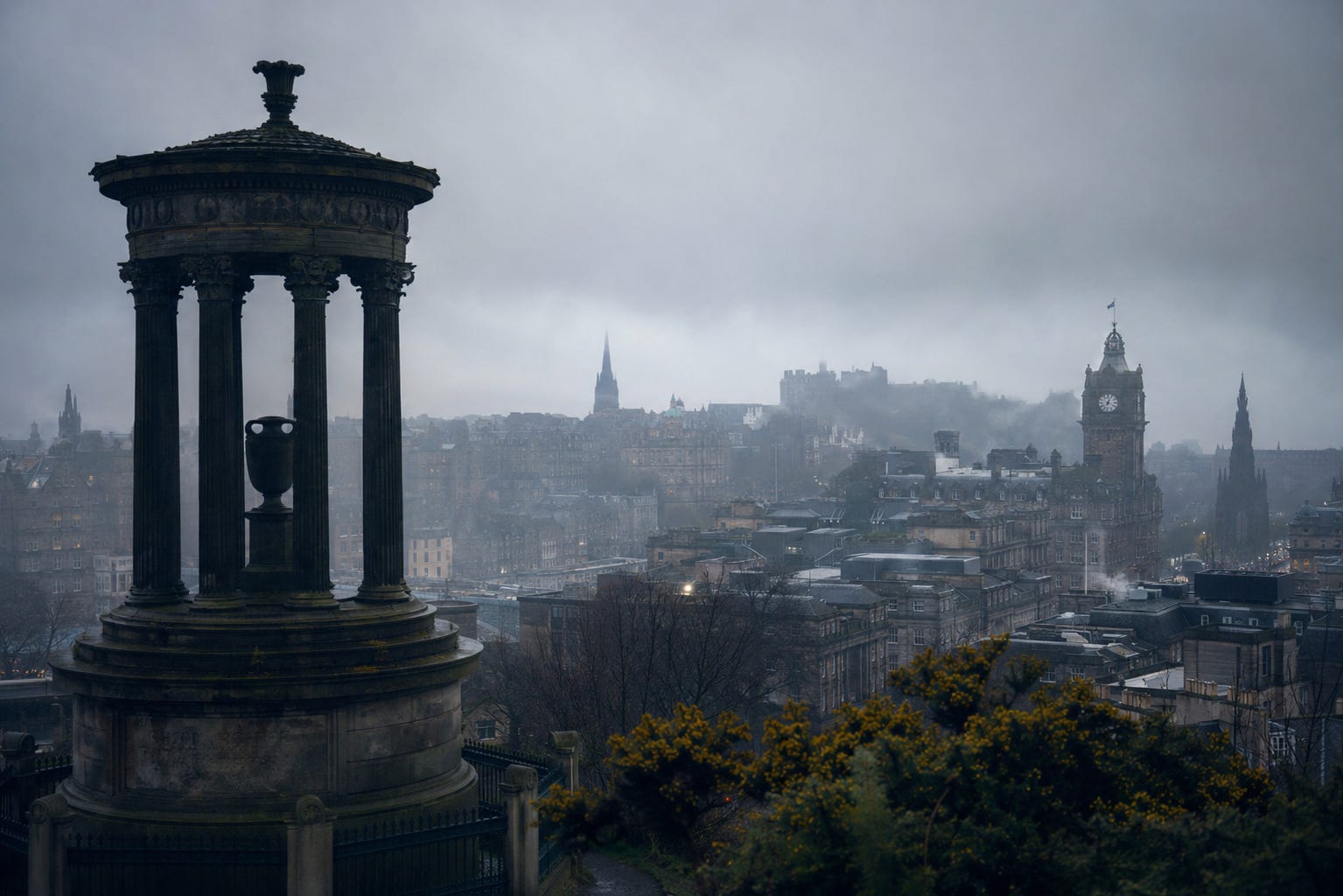
My wife and I recently visited Scotland, and in particular Edinburgh, and I have been thinking about that visit in light of the Scottish Parliament recently voting to endorse another referendum on independence.
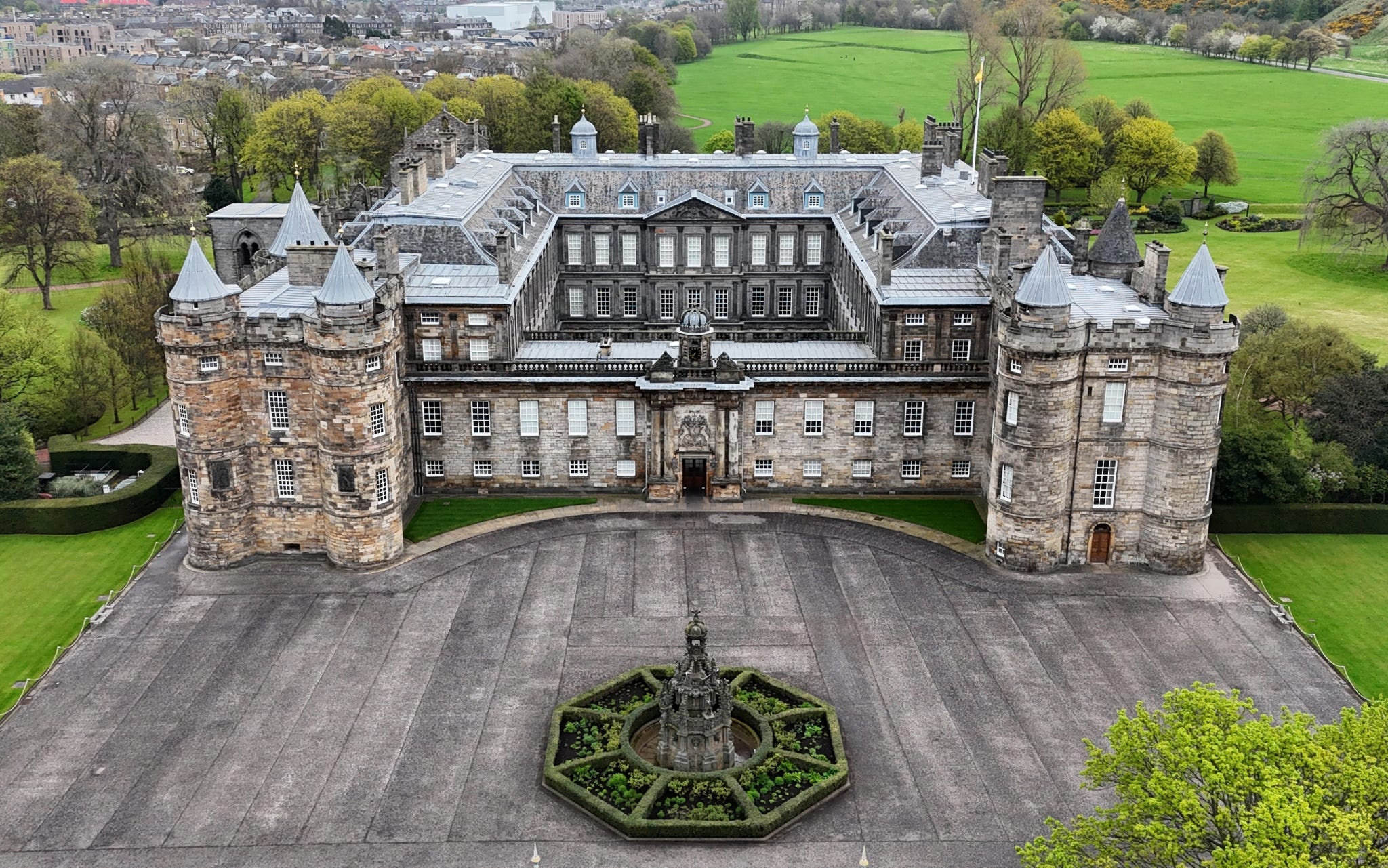
We stayed in an Airbnb within a stone’s throw of both the Scottish Parliament building and Holyrood, where the King stays when he is in Edinburgh. Before getting into the politics of Scottish independence, though, a few on-the-ground impressions struck us first.
The train station was very well-maintained, and the trains themselves were clean and efficient. When we arrived, it was only a couple of minutes from the station to where we were staying. The building we stayed in was over 250 years old, with a great deal of history and beautiful gardens around it. That sort of thing is hard to replicate. It gave the whole stay a feeling of being surrounded by a country with deep roots.
Even though Edinburgh is one of the more diverse cities in Scotland, and even though we were there during tourist season, it still did not feel nearly as alien as London. There was still a recognizably Scottish feel to the place. You did not feel as if the older character of the city had been completely swallowed up.
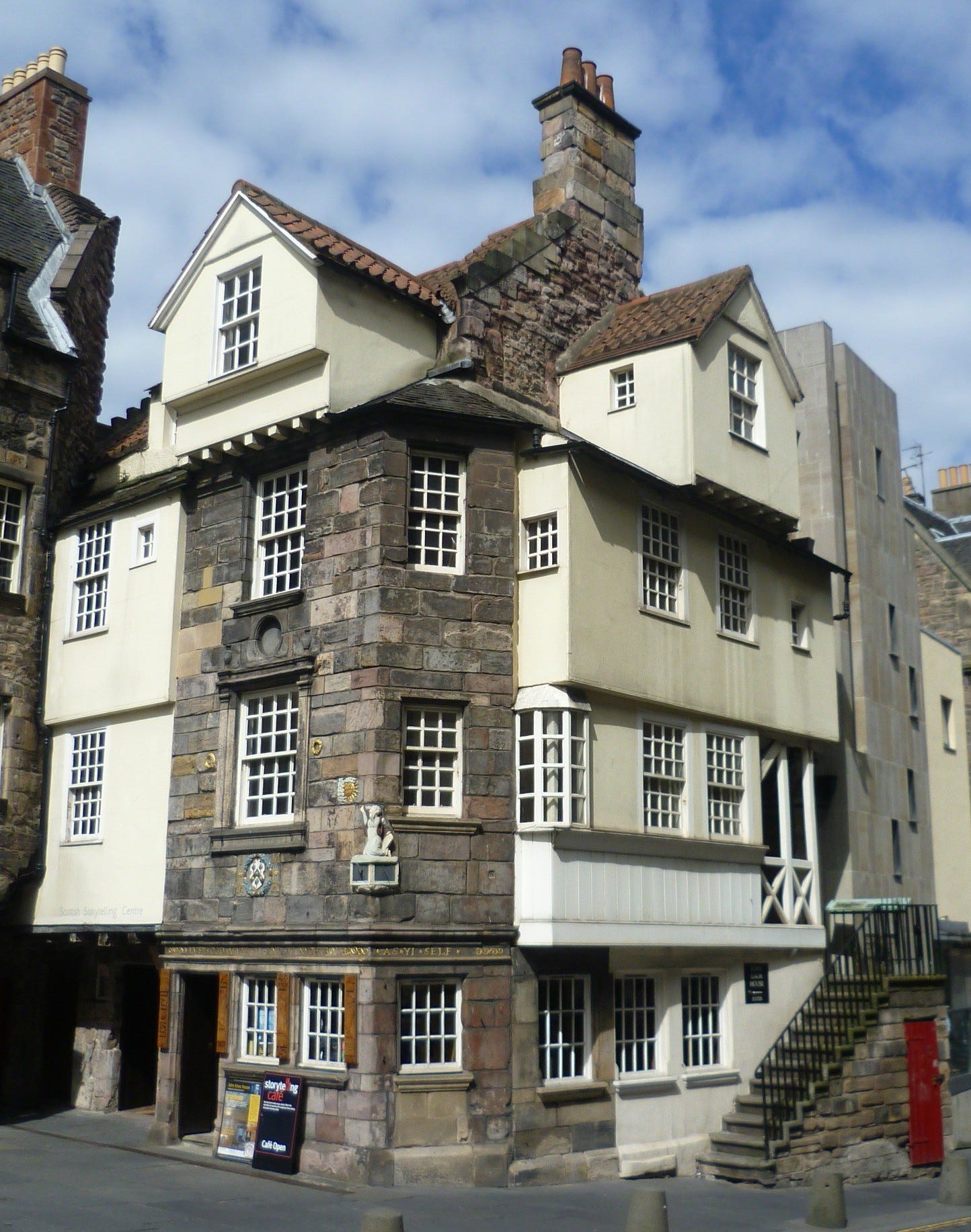
We visited Edinburgh Castle, and we also visited the home of John Knox. You see in Scotland, even in its most cosmopolitan city, the history of a practical, independent-minded people still abounds. Knox’s home is a major tourist stop, even though his practical, anti-egalitarian, yet anti-despotic theology would send most people running for the hills today. His legacy still lives on, not just in Scotland, but in America as well, where his covenantalism became constitutionalism.
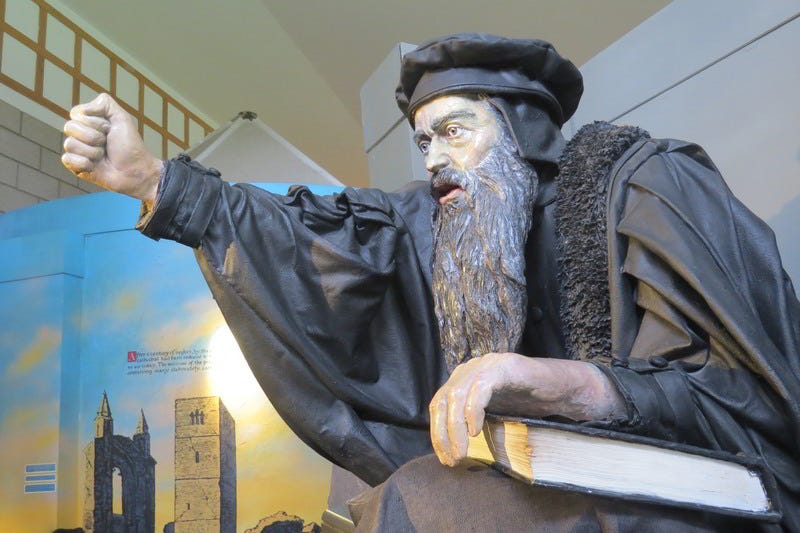
That is one of the things modern people often miss about Knox and the old Scottish Reformed tradition. It was not egalitarian in the modern sense. It did not believe that all men were interchangeable atoms, or that society could be built on sentiment and slogans. But it was also not servile. It was deeply suspicious of arbitrary power. Kings were under God. Magistrates were under the law. The people were bound together in a covenant. That older Scottish instinct—stern, practical, religious, and resistant to tyranny—crossed the Atlantic and helped form the American constitutional mind.
That older Scotland is still visible in Edinburgh. It is visible in the castle. It is visible in the churches and the old streets. It is visible in the old Parliament building, which was in use before the creation of Great Britain in the early 1700s. That building, near historic churches and many other great buildings, is far more beautiful and dignified than the current Scottish Parliament building.


And that brings me to one of the sharpest contrasts of the trip.
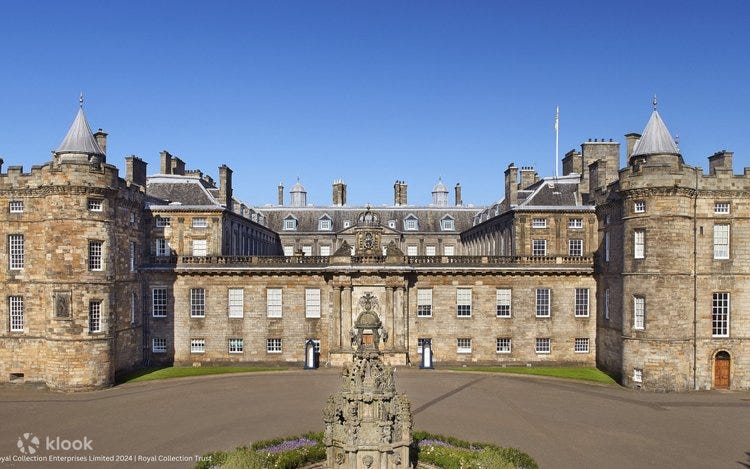
Edinburgh Castle is beautiful. Holyrood has its own historic dignity. The old parts of the city have a grandeur that only centuries can produce. The Scottish Parliament building, by contrast, is ugly. Not just somewhat odd or modern in a tolerable way, but genuinely ugly. The locals we talked to seemed almost unanimous in thinking it was a monstrosity of hideous 1990s architecture.
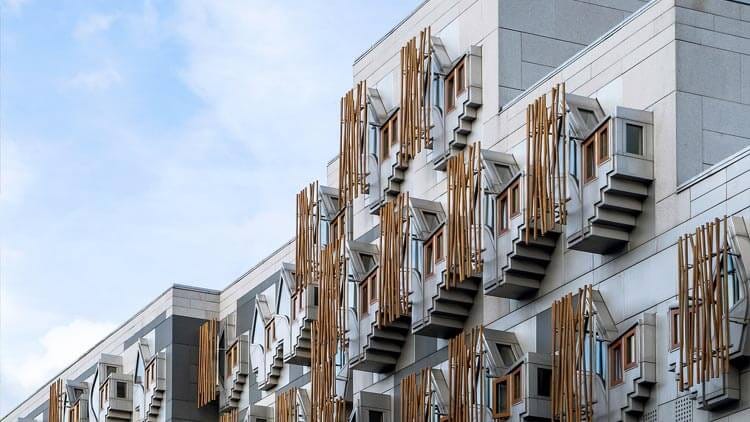
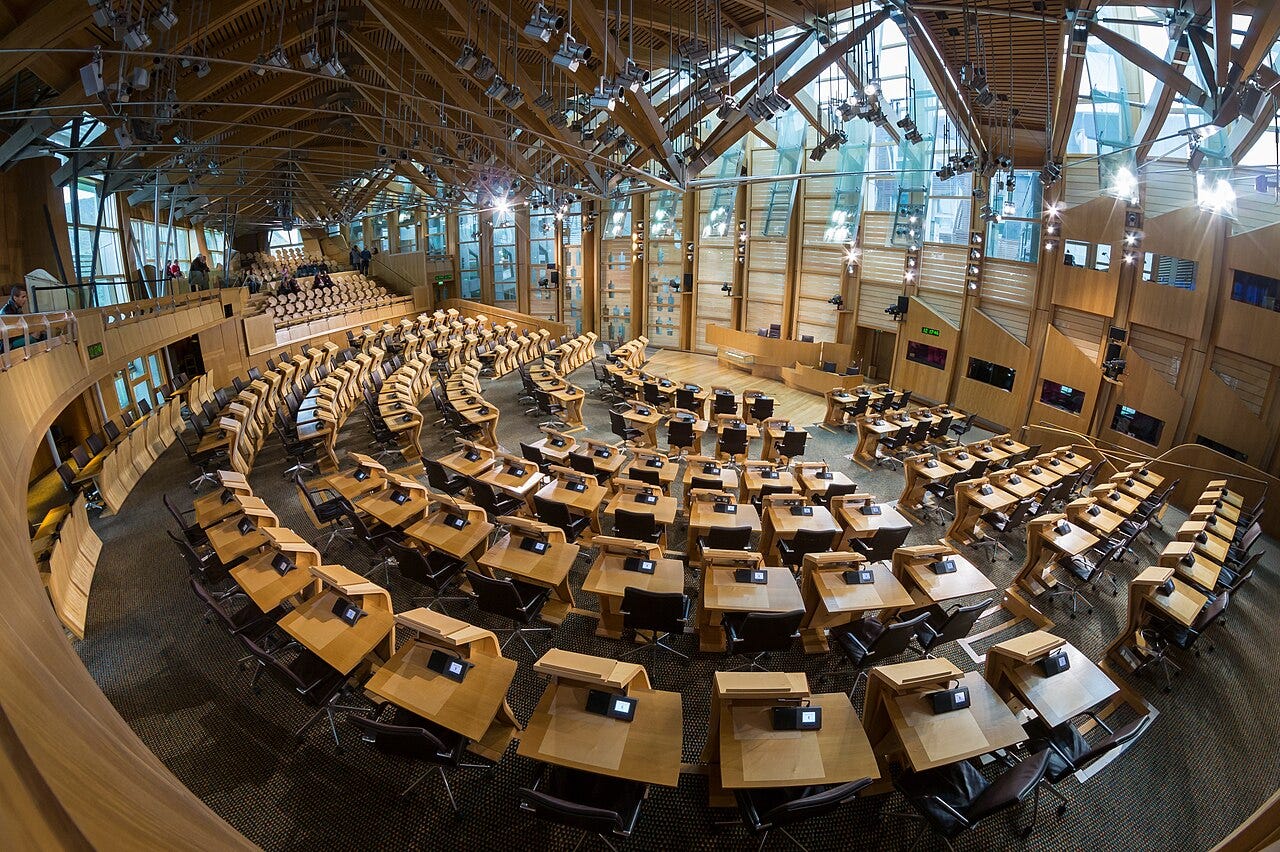
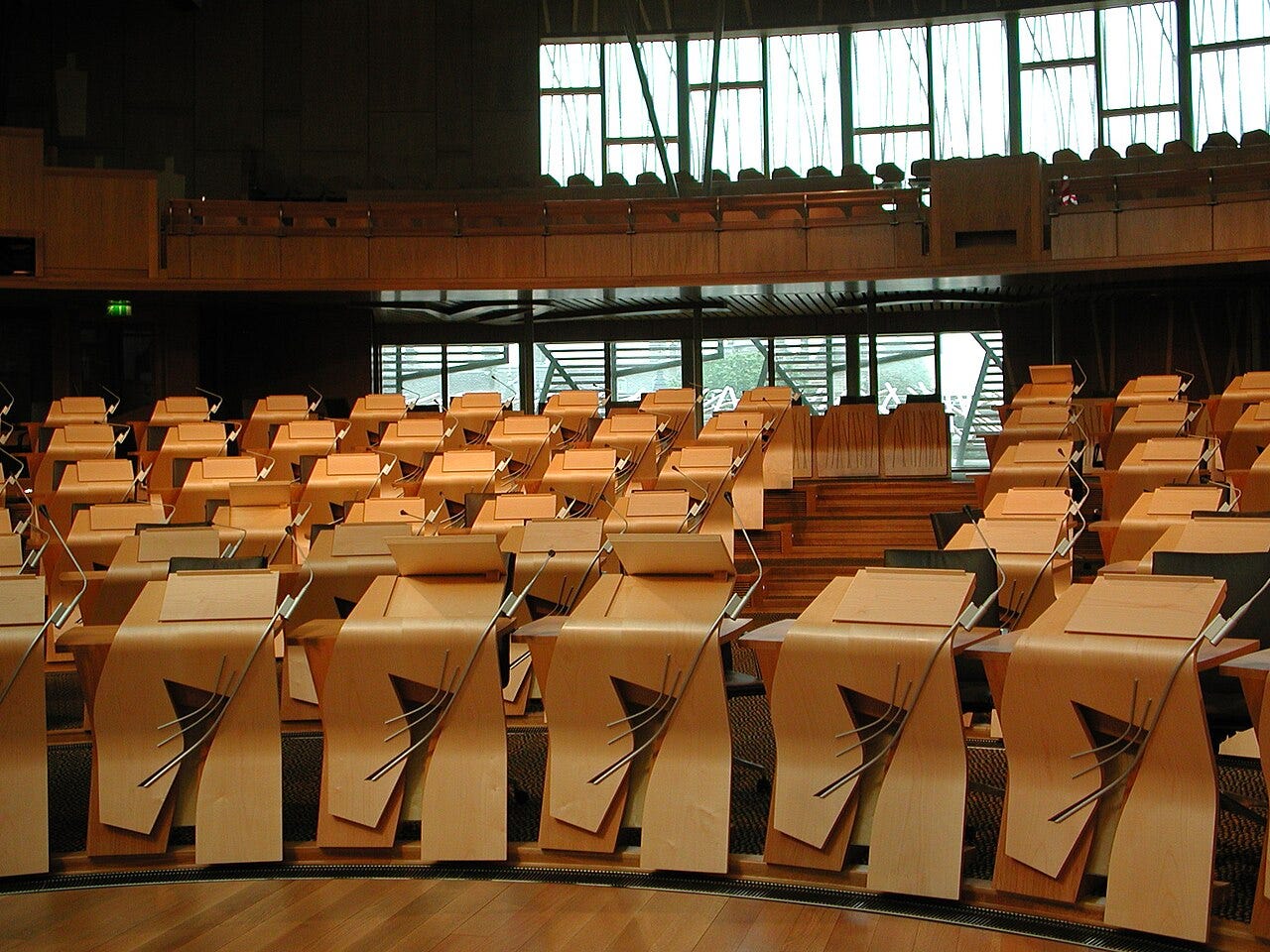
The outside looks like a total wreck of a job, the kind of thing a toddler could have done better. The inside looks nothing like the grandeur of Westminster. It looks more like a municipal building than a house of parliament. The chamber where the Scottish Parliament meets is decorated like some mid-level American city council chamber. It has none of the weight or seriousness that one expects from a national legislature.
That may sound superficial, but I do not think it is. Architecture says something about a regime. Westminster looks like the seat of an old civilization, even when the politicians inside it are fools. The Scottish Parliament building looks like the product of a self-conscious modern political class trying to symbolize a new Scotland while cutting itself off from the older Scotland that actually gives the country its power and charm.
Walking around town, one was also reminded that politics is never too far away. While we were sitting in a restaurant on a Saturday afternoon, there was a pro-Gaza march going by. It was led by a mixture of obvious foreigners, as well as plenty of redheaded Scots. They waved Palestinian flags and held their signs, but altogether it was quite orderly. No violence broke out. It was political, but not chaotic.
We also saw a small demonstration that same day outside the Parliament building protesting the government’s movement away from the radical pro-trans agenda. What struck me most was how small it was. The total number of protesters could not have exceeded a hundred. Considering the size of Edinburgh and the social liberalism of much of Scotland, that was rather pathetic.
This is a cause that has been cherished by so many in the influencer and elite classes, and yet when we saw it on the ground, it could barely draw a crowd. To me, that showed something important. It suggested that the elite had largely abandoned the issue, or at least turned off the spigot of money, media attention, and institutional pressure. Once that happens, many of these causes are revealed for what they are. They are not mass movements. They are elite projects. Without elite support, the energy disappears quickly.
That is a good example of the truth of elite theory in politics. Many things that are presented as popular revolutions are really the work of institutions, donors, media, NGOs, and political actors pushing from above. When the support from above is withdrawn, the supposed mass movement shrinks down to a few activists outside a government building.
As we drove around and talked to people, we got some interesting impressions from our Uber driver, as well as from people we encountered in shops and other places in casual conversation. We heard from people who thought the Parliament building was ugly. We also heard the view that it would have been a horrible mistake to leave the UK back in 2014. There was a typical view of politicians as windbags and self-important talkers, which seemed about right.
And when you look back to the 2014 Scottish referendum, Edinburgh is especially interesting. The independence side was defeated there by roughly 61–39. If anything, I would expect the number to be even more against independence today in Edinburgh, despite the general left-liberal character of the city.
The polling now seems to show a slight edge for independence if a referendum were held today. But at the earliest, such a referendum would be a year away, and a great deal can change in a year. It is quite possible that Keir Starmer will be out as Prime Minister by then and that Andy Burnham could be the new Prime Minister, giving Labour a temporary sugar high. If that happens, Labour may be even more inclined to reject the idea of independence in Parliament, or at least more capable of rallying unionist sentiment.
That is the thing about this latest Scottish Parliament vote. It sounds dramatic, and in one sense it is politically significant. But in another sense, it is still a vote inside a devolved parliament that cannot simply create independence by wishing for it. The real question is not whether the Scottish political class wants another referendum. Many of them plainly do. The real question is whether the Scottish people, when forced to look at the practical consequences, actually want to leave the United Kingdom.
My impression from Scotland was that it is far more practical than one would think from following Scottish politics at a distance. The loudest voices are not always representative. The Scotland we encountered was not some revolutionary nation on the verge of breaking free. It was an old country, full of history, beauty, and local pride, but also full of people who know politicians are often fools and promises are often cheap.
There is certainly an independent-minded spirit in Scotland. You can see it everywhere. You can see it in the memory of Knox, in the old covenantal instincts, in the castle, in the older Parliament, and in the general suspicion of being ruled too directly by distant powers. But that same spirit is also practical. It does not automatically translate into support for the modern SNP vision of independence, especially when that vision is tied to progressive managerial politics, ugly modern architecture, and the same elite obsessions that have disfigured much of the West.
In that sense, Scotland is complicated. It is old and modern, nationalist and practical, left-wing in many of its institutions but still visibly rooted in an older and sterner world. The Scottish Parliament may vote for another referendum, and the polling may move back and forth, but the real Scotland is not reducible to parliamentary motions or activist slogans.
What struck me most was that Scotland still feels like a real place. Edinburgh, for all its tourists and diversity, still felt Scottish. Its past was not hidden. Its history was not dead. Its older religious and political instincts were still there, even if many modern Scots would not describe them in those terms.
And that is why I came away thinking that the independence question is not as simple as outsiders might imagine. Scotland has every reason to remember that it is a nation. But it also has every reason to distrust the class of people currently claiming to speak in the name of nationhood.
The Scotland I saw was beautiful, historic, orderly, skeptical, and much more practical than its political rhetoric suggests. That practical streak may end up mattering more than any vote in Holyrood.