Russian and American Approaches To War
(And It's Not About What You Think!)

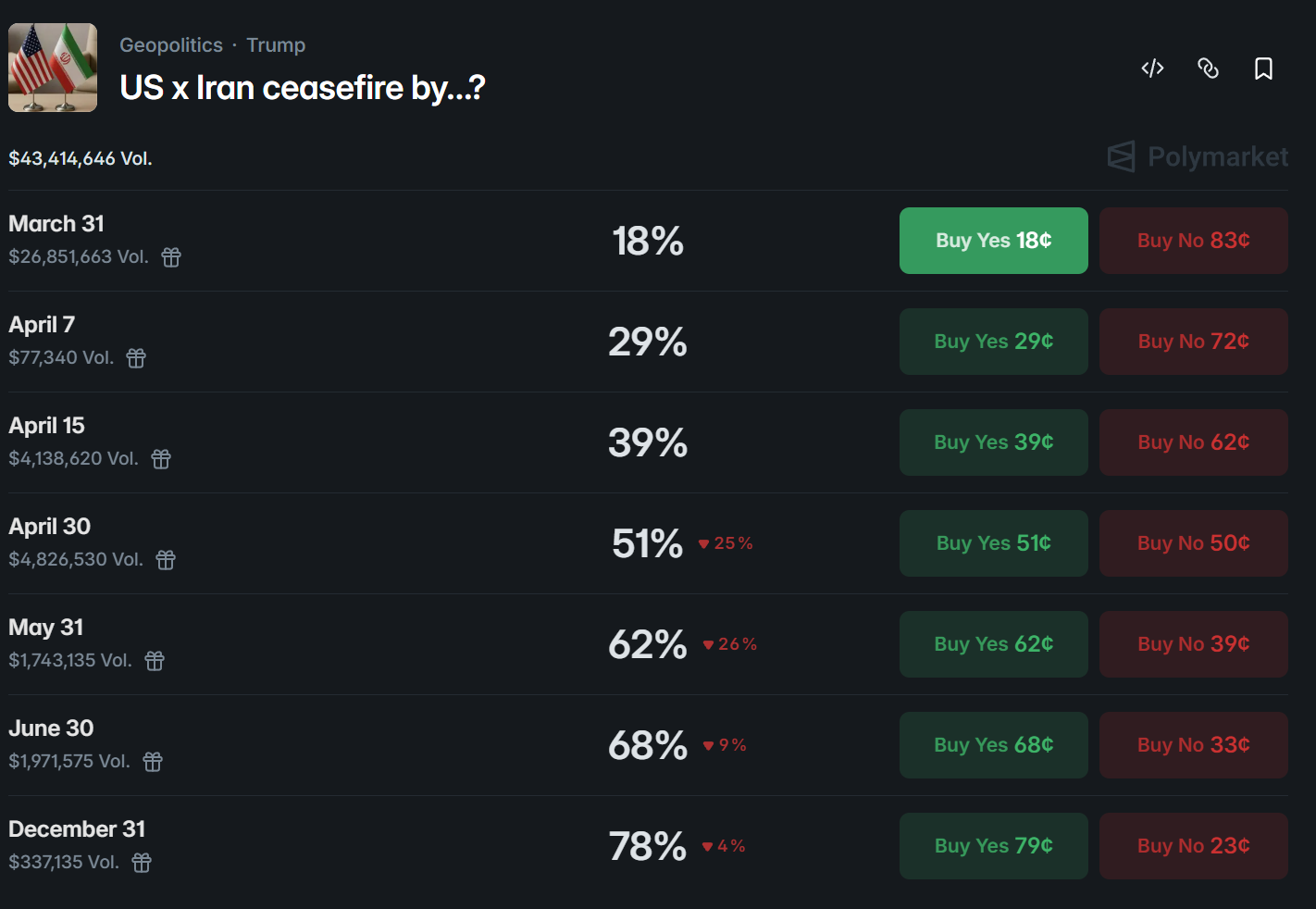
I started writing this article on the first news of a potential peace agreement between Iran and the United States. Despite being skeptical of this possibility, I am certain that the Americans want to peace-out but structural factors like the Israel lobby and Iranian resistance are preventing them from achieving a peace agreement.
In this article, I won’t be talking about how the Russians are killing way less civilians than the Americans or how the Americans are fighting the war way more effectively, while suffering minimal manpower losses. This is all common sense, and if I wanted to make an emphasis on that, then I’d not differ from any other commentators.
Instead, I want to emphasize the psychological aspect of Russian and American decision making in regards to war, and with regards to other aspects of the decision making chain. A difference in mentality between Russians and the Americans or Westerners more broadly.
That is, the American society is able to reflex and course correct whereas the Russian is not and I will show how this is both a strength and a weakness.
The Russian Approach To War
Russia’s fundamental characteristic as a strategic actor is its capacity for endurance and psychological rigidity. It is a national characteristic of the Russian state. The Russian society, shaped by centuries of catastrophic wars, famine, and poor living standards has developed a tolerance for collective suffering that Westerners did not.
The Ukrainian population, likewise, heir to the same historical dynamics, has demonstrated the same quality. Both peoples have absorbed casualty rates and material deprivation that would have produced existential political crises in any Western democracy within months and as we know by the Iranian campaign even within weeks.
The Russian rulers have also developed a very rigid approach to governing their own population, manifested by severe state violence, repression of the opposition and appearing strong which all predisposes them against course correction and for sticking with the strategy that they have adopted no matter what. In the maximalist sense it implies that the entire Russian political and social structure is built on the fiction of infallibility from above and once the ruler had made a decision, the entire country must stick to it or face punishment.
These two factors make course correction nearly impossible. The Russian system lacks feedback loops that function in a similar fashion that it does in the Western states because the Russian regime sees their own population as a potential threat to power, but as a result of that they are able to make unpopular decisions and stick to them.
Perhaps it is my post-hoc rationality, but speaking purely in terms of state aggregation and not in terms of the economy, demographics (debatable) or international law fighting a long war of endurance has probably paid off. It is certain that had Russia peaced out in 2022 and not in 2026 or next year, its gains would have been smaller than they are now. Likewise, the maximalist Russian aims of 2022 did not include land annexations but they did include an unsustainable regime change done in a country which clearly doesn’t want it.
Regardless, the Russian elites could have adopted a more efficient strategy of engagement had they operated more like the United States in which the deep state, intellectuals and the media are directly engaged in war strategy deliberation instead of outsourcing all these decisions to the delusional leader.
And so because the Russian political structure does not produce information that travels honestly upward, or creates a competition between the elites, the Russian system does not create mechanisms by which policy mistakes are identified, owned, and reversed. They always double down on them instead. The decision to invade in 2022 under the assumption of a swift Ukrainian collapse was clearly an intelligence failure, one that is possible only in countries like Russia, but the decision to continue fighting the war despite knowing that a Ukrainian military defeat would be impossible in the foreseeable future is another important characteristic of the Russian approach to war that has probably paid off.
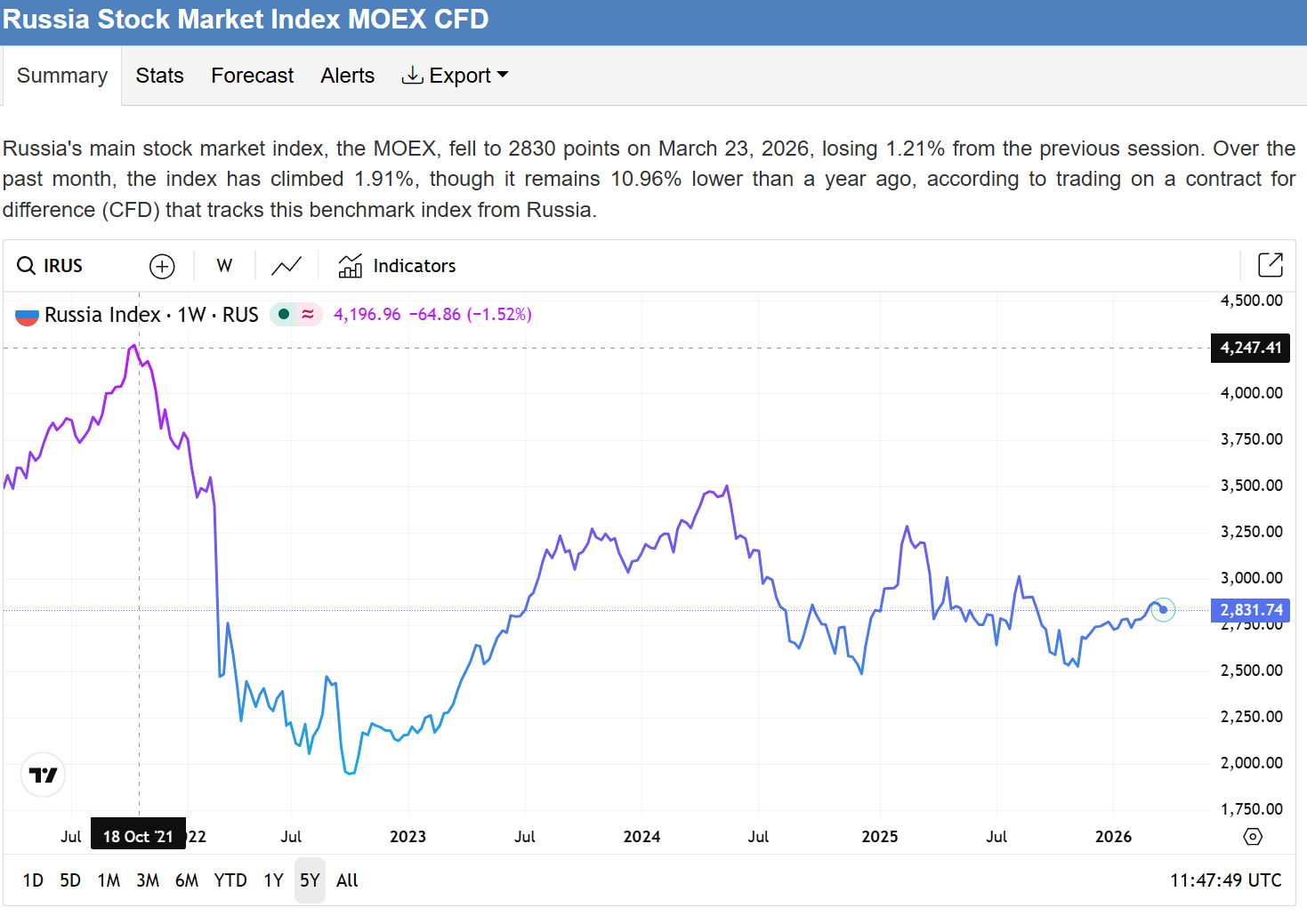
Think of the Russian stock market for instance, not many Westerners know this but after 4 years of war it has still not recovered. Now contrast it to how the Americans have crashed out and panicked after Dow Jones fell by 8 percent, Gold fell by over 20% and gas prices jumped by a third. This manifests a clear civilizational difference.
Yes, the overall Russian economy grew, but the foreign investment has completely evaporated and the BRICS allies aren’t doing much of help. A reasonable estimate, based on the trajectory of Russian equities before the war, suggests the Moscow Exchange would be at least 100 percent higher today had the war not happened. That’s a lot of savings wiped out and I’m not even talking about more than 200 billion euro of frozen Russian assets.
What’s clear is that the Russians have suffered much more significant military and economic casualties and continued to fight the war, whereas the Americans suffered moderate economic casualties and low military casualties and already want to quit the war.
And while the decision to continue fighting in Ukraine will be intensively debated by historians, what’s certain is that Russia could have peaced out and saved face during the Crimean war but chose to double down and still lost anyways. Here are a few off-ramps it was offered right after annihilating the Turks at the Battle of Sinope and before starting a long war of attrition in which Russia will suffer a strategic defeat:
“And in 1854 Russia will be able to show itself the same as it was in 1812!” Do we fear them? Have we not beaten Napoleon? No, their threats “will not stop me. I will go forward on my way, as my beliefs dictate to me. I will insist on it, to the last ruble in the treasury and to the last man in the country.” Alexander Menshikov, a man close to the Czar, complained afterwards: “After the Hungarian campaign, the sovereign was like a blind drunk; he didn’t listen to any reason and was convinced of his omnipotence.”
PS: Reminds me of a certain orange monke after the Venezuelan campaign
Even then, it was not too late to prevent a war with Europe. On February 4, 1854, in a personal letter to the czar, Napoleon III promised that the allied fleet would immediately leave the Black Sea and the incident would be considered over if Russia signed an armistice with Turkey and evacuated its troops from the Danube principalities. France clearly did not want to fight for Turkey. Nicholas replied mockingly that “Russia will be able to prove that it is the same in 1854 as it was in 1812.” And you will have, they said, the Cossacks in Paris again. And when the cabinets of London and Paris officially demanded the removal of Russian troops from the principalities by April 30, Russian Empire diplomat Karl Nesselrode arrogantly declared that His Majesty did not consider it necessary to answer them.
The Soviet-German war also was an elite failure despite the Soviet intelligence accurately informing Stalin of the incoming attack by the Germans. If Stalin doesn’t believe it’s possible then the reality must bend his way.
When I was reading table talks to extensively document Hitler’s anti-Slavic sentiment, I came across the following observation he made:
What is surprising about the Russian rulers is the fanaticism with which they adhere to a principle—perhaps a correct principle, in itself—even when it has become evident that the principle has ceased to be correct in fact. The explanation is their fear of having to accept responsibility for a failure. For they never suffer failure because of a weakness in their command, a shortage of ammunition or an irresistible German pressure. It's always because of "an act of treachery". They never produce any other explanation but treachery, and every commander of a unit who has not succeeded, in conformity with the orders he has received, runs the risk of having his head chopped off. So they prefer to be wiped out by us. On the other hand, the offensive spirit that inspires the Russian, when he is advancing, does not surprise us. It was the same during the first World War, and the explanation for it is their bottomless stupidity. We've forgotten the bitter tenacity with which the Russians fought us during the first World War. In the same way, coming generations will see in the campaign now in progress only the magnificent operation that it will have been, without giving any more thought to the numerous crises that we had to overcome by reason of this tenacity.
Obviously we all know how the war ended, and the so-called “treachery” element is not as strong now as it was back then, but he is right in terms of adequately acknowledging that the Russians are not able to accept that they’ve made a mistake and need to course correct to the extent that Western society is capable of.
The American Approach to War
As I have said, the American losses are moderate or low in comparison to Russian ones measured in absolute terms but very severe in comparison to their own tolerance for losses.
Because America is more or less a functional liberal-democracy in its modern limited sense, discourses around the Iran war are not policed nor censored and you can get all sorts of opinions about the war at every level of the hierarchy, which greatly improved the efficiency of the decision making chain.
Furthermore, there is good evidence to believe that the majority of the American deep state believes that the war in Iran was a mistake.
I would say this is good for this particular conflict because I believe that the American interests aren’t advanced by building Israel an empire and ruining their own international reputation and economy in the process.
If the United States were to continue this war with Iran, for a few more months there would have been irreversible recession and possibly a stagflation and as soon as the Trump administration understood this along with realizing that they’re not going to defeat Iran militarily before the midterms they have course corrected.
This reminds me of the 2025 tariff war which have likewise initially collapsed the economy before quickly rebounding once the tariffs were eased. Same with Greenland, the operation looked very promising initially but as soon as it became clear that Europe is going to fight against the United States militarily if it were to use force, Trump quickly backed off, while securing some important concessions from the EU.
As soon as the American leadership acknowledges that it has taken a wrong decision, it course corrects without committing to more losses.
TLDR: the American system has a functional feed-back loops which is a huge advantage for the stability and efficiency of its political system, though it has other problems that the Russian society does not, like the insane leverage and influence of the Israeli lobby and its giant skew towards the left of the political spectrum which manifests itself even when the Republicans are in charge.
Personally, I lean towards the American approach over the Russian one. Had the Americans taken the Russian approach in their war against Iran, they would have undoubtedly destroyed the world’s economy and lost political legitimacy in the world and inside the United States. Likewise, they may have even turned into a dictatorship, which is just extra negative aura points.
But there still are strategic issues with the American approach of non-commitment, because there is a high likelihood that unpopular yet correct decisions would simply be abandoned due to public pressure. You can definitely make this argument in relation to the Vietnam War, and I believe that the same will be the case for the upcoming Taiwan war.
If the United States abandons Taiwan due to public pressure, then it would not only be a prestige defeat for the United States but a massive blow to its AI and microchips market, propelling China way ahead of the United States in the technology race. You can certainly make the argument that it’s the most consequential entanglement for America post-WWII. The economic and strategic significance of Taiwan is much greater than that of Vietnam, Ukraine, Iraq, Iran, and every other country the United States has been entangled with.
If the Americans are already cucking out because they’re close to a recession, consider the economic impact from a conflict with China. It will be much more severe than the Iran war, and I believe it has all the makings of paralyzing the US advanced military industry because of its dependence on Chinese and Taiwanese exports.
As a result, I believe the United States will have no choice but to give up Taiwan, something the United States would never do had it adopted a Russian strategy
PS: The irony of all of this is that the Chinese would eventually ban all high-technology and critical minerals exports to the United States after they would take Taiwan so America is doomed in either way.