

The geopolitical map of the twenty-first century is being redrawn, not by shared values, but by the cold calculations of survival. As the United States pivots toward a confrontational stance with a rising China and faces unprecedented friction with its traditional European allies, the rigid dichotomies of the Cold War are becoming obsolete. The liberal-globalist project of the last thirty years has inadvertently midwifed a formidable Sino-Russian axis that threatens American hegemony. By stripping away the requirement for ideological conformity, the United States has the chance to fracture the unequal partnership between Moscow and Beijing. This piece explores why a strategic pivot toward Russia is not only a historical possibility but a geostrategic imperative for an America looking to secure its interests in a post-globalist world.
Delayed for roughly a year, this piece is finally seeing the light of day just as US-Europe geopolitical tensions reach a boiling point while it appears that the Ukraine war is about to come to a conclusion.
This is my re-editing of the article which first appeared on America First Post.
Present Situation:
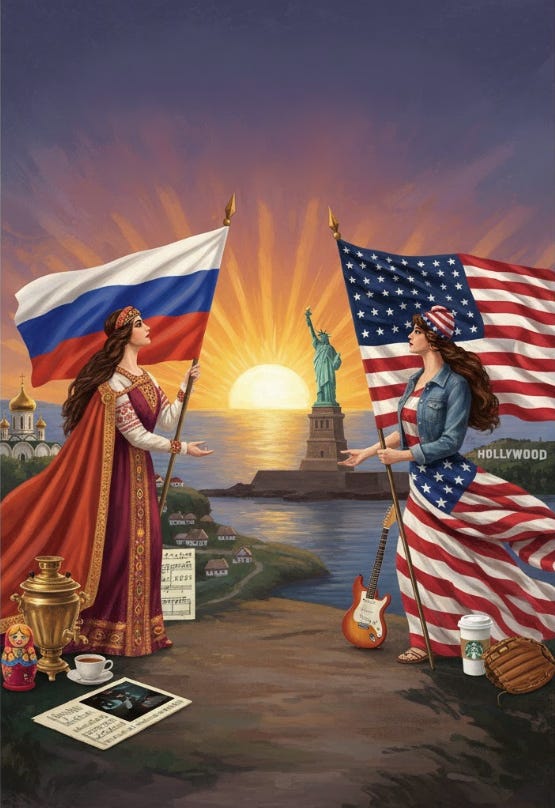
Russia and the United States were bitter rivals and the only dominant global superpowers of the latter half of the twentieth century. With the collapse of the Soviet Union, Russia lost the capacity to compete on an equal footing with the United States, declining from a global superpower to a regional one, lacking the ability to project power or exert pressure on the American continent and becoming focused on its own tiny sphere of influence.
In contrast, in their new national strategy the Americans make it very clear that the United States is looking to impose economic pressure on China and deter it from controlling the South China Sea, while also exerting diplomatic and soft-pressure on the Europeans to be more aligned with American-Conservative standards.
Russia’s current confrontation with the West is largely confined to its immediate sphere of influence, while the informational war it wages takes the form of supporting far-right and pro-Russian factions within the Western world as a means of restoring relations.
If you take a look at Russia’s political interference into the European theater, it is nearly identical to the US’ model of “Making Europe Great Again”. In other words Russia is supporting the same European factions like AfD, Orban that the United States is supporting: Nationalist and Conservative Eurosceptics.
Russia’s interference in the American political scene—whether through outlets such as Tenet Media or figures like Dugin likewise aims to cultivate Christian-nationalist, pro-Trump, and conservative forces within the United States. In this sense, despite the differing character of the two regimes, as ironic as it is, the Trump administration promotes many of the same social values advanced by the Russian government and views the ideological landscape in a similar way as does Putin.
Furthermore, both Russia and the United States are appreciated by the populist right wing faction of the European Union which implies that a US-Russian rapprochement will also benefit Europe in the long run as it will cool down the tensions.
Russian American Friendship in the 2000s:
The US and Russia have been allies and rivals many times in history. Last time, it occurred in the early 2000s, when Russian President Vladimir Putin developed a fantastic relationship with his American counterpart and even warned George W Bush of potential danger coming from Bin Laden months before 9/11, causing a bonding effect between Russia and the United States.
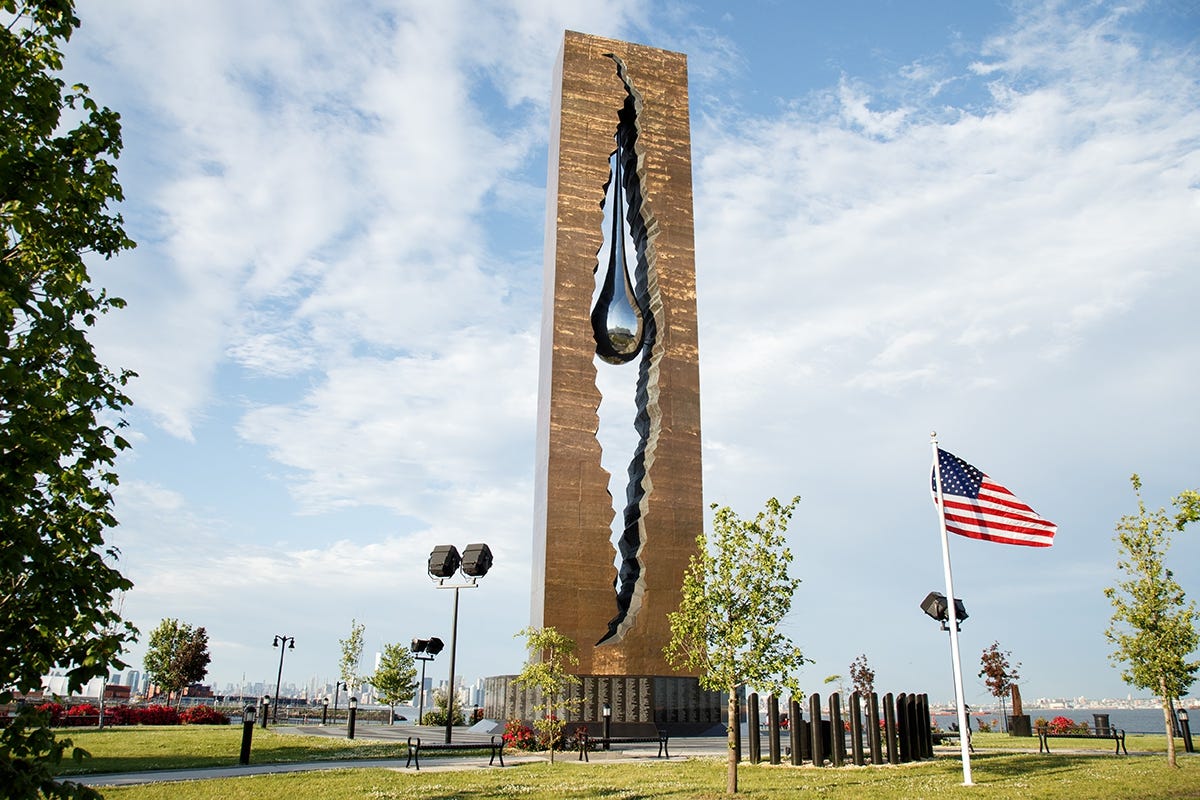
On the fifth anniversary of 9/11, the Russian government presented the United States with a 100-foot statue commemorating the victims of the September 11 attacks and the 1993 World Trade Center bombing. The monument still stands to this day and it is the second largest monument/sculpture that the US has received from a foreign power, but Putin’s name is now covered by two plaques.
Putin also made multiple public and private attempts to join NATO in the early 2000s, both to Clinton and to Bush. These attempts weren’t heard and the United States prioritized dragging Ukraine and Georgia into the alliance, despite Russia’s protests, ultimately causing Russia to invade Georgia in 2008 which has greatly worsened the US-Russia relations.
In 2009, the US and Russia tried restoring relations again, and in the first few years, the results were highly successful for both. Russia was allowed into WTO and as a sign of reciprocity it joined the American sanctions against Iran, supported the NATO military operation against Libya and provided the American-NATO forces with a transit hub inside of Russia as part of the Northern Distribution Network.
There were negotiations about no-visa between Russia and the European Union and also discussions of Russia joining the Union. That was a time of normalization and clear Russian alignment with the West and the United States as opposed to BRICS and China as it is now the case.
Chinese-Russian Alliance and Reverse Nixon:
Russia’s current partnership with China is widely perceived by Russian analysts as unequal and exploitative. Because China is the far more powerful state, it often dictates trade and diplomatic terms that favor its own interests. If Russia-China rapprochement were to deepen, it would be a matter of time before China starts to openly exert influence over Russian domestic politics, rendering the relationship increasingly suffocating.
If such a scenario were to materialize, Russia could effectively become a Chinese client state with China potentially leveraging Russian territory as a strategic corridor for a land-based military thrust into the European Union or using Russian natural resources and territory to transport sanctioned goods and raw-materials if it finds itself at war with the United States, should it deem this necessary.
For better or for worse, due to its immense human resources, higher intelligence and productive capability China will overtake the United States as the leading world superpower sometime this century and it is not certain that China would limit itself to Eurasia.
The United States currently faces a roughly 0–15 year window of opportunity to fracture the Russian–Chinese alliance and replace it with an alternative one more compatible with Russia’s cultural identity and geostrategic interests.
Russia may not be a democracy now, but Russian elites have arrived at almost the same cultural convictions as the Trump administration. Russian increasing dependence on China would certainly not help in it becoming a Western state again.
Bottom-Up Incentives For An Alliance:
While American attitudes towards Russia are generally negative, despite all what happened the Russians appear to be positively inclined towards the United States.
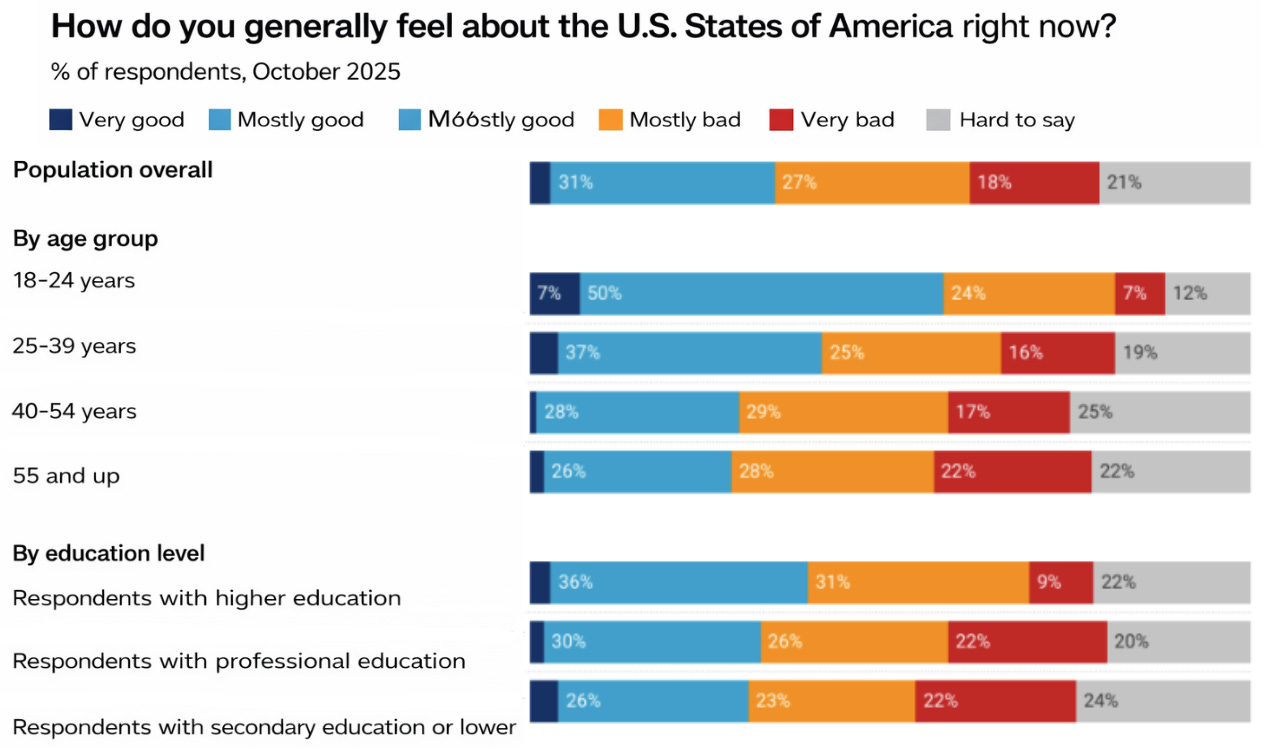
These attitudes are most prevalent among the young and the highly educated, suggesting that any potential alliance with Russia would likely emerge as an intergenerational coalition driven primarily from below.
Furthermore, if we look at the dynamic of Russian attitudes towards the United States, positive attitudes have predominated right until the second term of the Obama (September 2013 was the tipping point) administration and have significantly worsened under Biden before semi-normalizing under Trump.
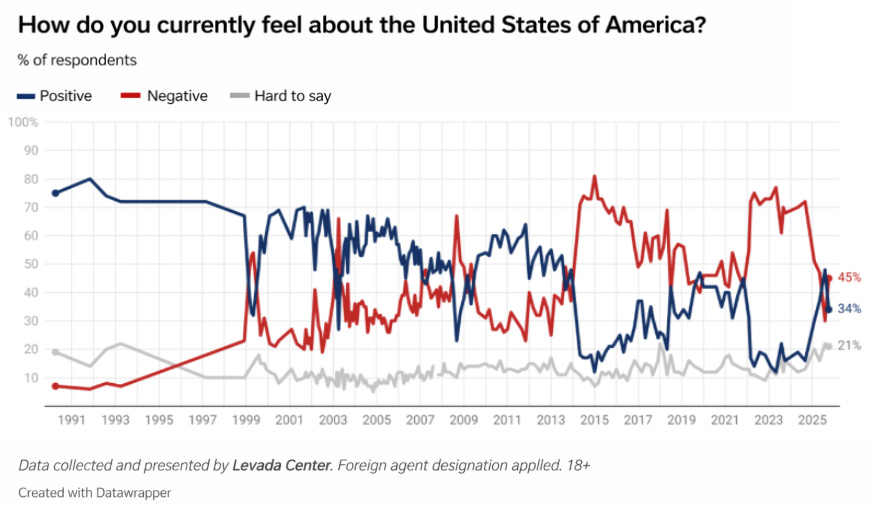
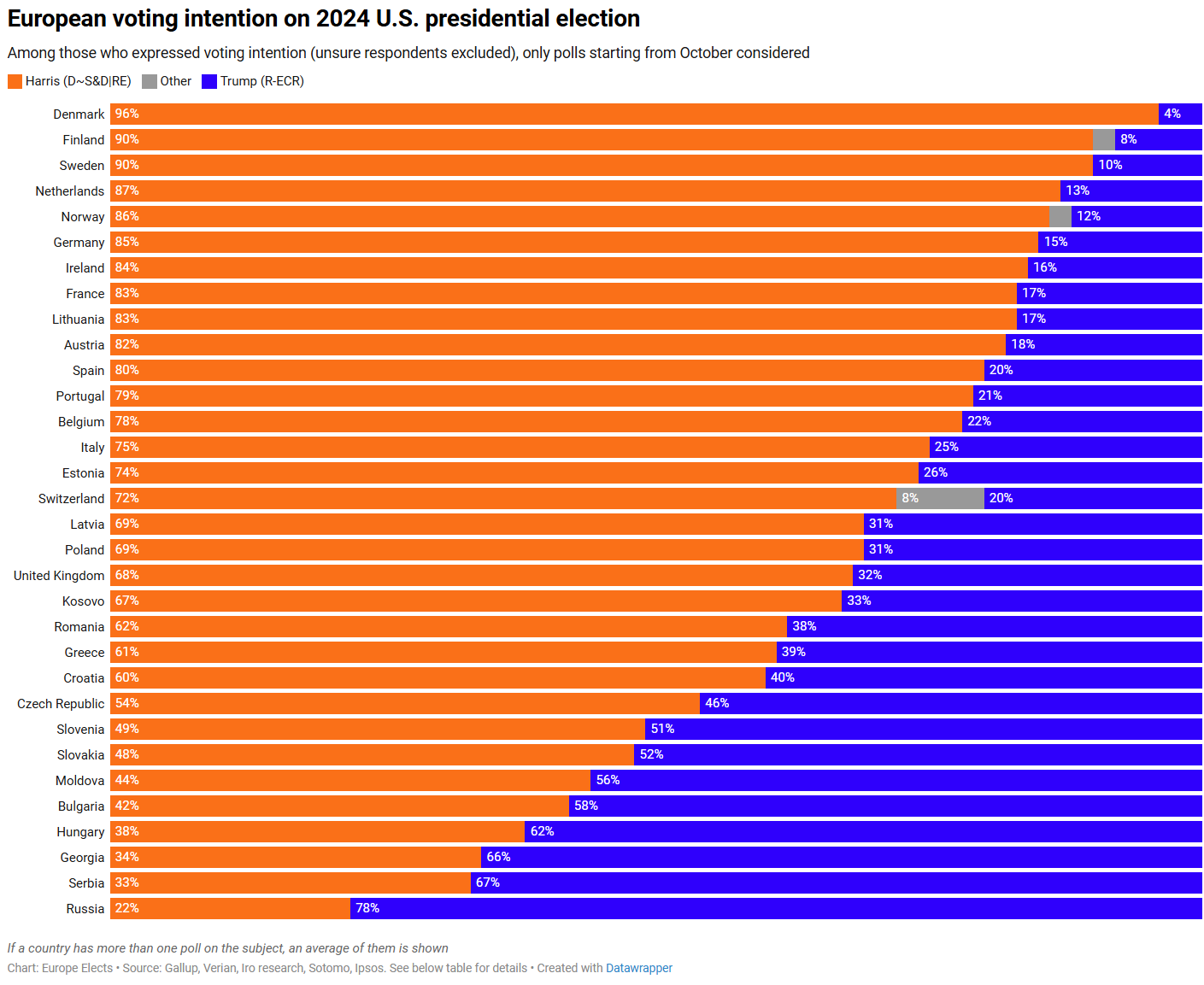
Despite ongoing geopolitical tensions, Russians appear to have an instinctive positive inclination toward Trump and the Republican Party—regardless of its stance on Russia. My survey analysis of Russian Canadians supports this: they tend to favor the Conservative Party here, even though it takes an anti-Russian line. This suggests the attraction is fundamentally a matter of temperament, which is supported by further data from Eastern Europe, which tends to be anti-Russian yet supportive of Trump nonetheless (unlike Western Europe).
Geostrategic Benefits and Practical Advantages of a US-Russian alliance:
There are clear geo-strategic benefits for a US-Russian alliance. First, Russia is a middle-man between the East and the West. It is a land bridge empire which stretches from the European Union to China, thus is able to exercise American influence on both European Union and China if needed.
The geostrategic landscape of Eurasia puts Russia in a vulnerable position because both China and the EU are significantly more powerful than Russia and thus for security reasons it is natural for Russia to seek allies from other places, which is why her strategy has been to seek a closer alignment with India recently. The United States is likewise not interested in a strong European Union nor strong China and so it can use Russia as a way of projecting its own power, since Russia will naturally not be able to compete with the United States unlike the EU or China.
Second, Russia possesses immense collection and production abilities of natural resources which can be extracted to fuel the American economy, as opposed to fueling the Chinese and the European economies as it is done now. Furthermore, these resources can also work as a form of a planetary leverage since both the United States and Russia control a huge percentage of the world’s resource market. Elevated or sunken prices on an important commodity are far-more effective than tariffs. The 1973 oil embargo inflicted severe damage on the global economy, while Trump’s tariffs, in their current form, appear to be producing only marginal effects.
Finally, there does not appear to be any natural animosity between the US and Russia besides the expansion of NATO or ideological culture wars, whether fought by Russia or the Obama-Biden administrations with USAID funding. If the United States and Russia align, there would not be any incentives for Russia to aggressively push against the West since its main geopolitical rival is now an ally. Another war in Europe will become structurally disincentivized unless the Europeans will push against the United States or Russia. There would definitely not have been a Ukraine war if the United States and Russia were friends.
Likewise, a U.S.–Russian alliance would benefit the European Union in the long run by eliminating the perception of a Russian threat and allowing confidence and trust to be gradually restored. America does not need to choose between prioritizing the Europeans or the Russians, both can be done at the same time as Russia and EU are natural economic partners, unless the United States goes for Greenland.
The primary difference between an American-Ukrainian or an American-Israeli alliance is that an alliance with Russia is likely to cost the US zero pennies whereas the economic and geo-strategic benefit for the United States is going to be enormous, whether we’re talking about resource extraction, mutual technological projects like the ISS or stationing of US troops inside of Russia as a means of deterrence.
Any alliance system is built on reciprocity, and an alliance that is not reciprocated or is perceived to be one-sided cannot be sustained and will eventually dissolve. The American–European and American–Israeli alliances are structurally vulnerable in this regard, as the United States performs the bulk of the strategic heavy lifting. By contrast, it is difficult to see how this asymmetry would apply to a U.S.–Russian alignment.
Understanding the Russian Perspective:
The main pretension of Russian elites towards the West is that the West is trying to isolate Russian involvement with the West, causing Russia to look elsewhere. Putin started off as a pro-Western leader with dreams of joining NATO and a united Europe from Lisbon to Vladivostok, but since the second term of the Obama’s administration this dream was crushed and Russia and West became hostile to each other.
We know why Westerners are hostile to Russia, but it is also important to acknowledge why the Russians are hostile towards the West and understanding the Russian siege mentality is key to that question. The Russians perceive the West—by which they really mean a liberal-globalist world order—as encroaching on their territory, starting from Georgia, the 2011 Russian protests and finally Euromaidan. However, we on the Right recognize that this encroachment constitutes not only a threat to Russia, but for ourselves and our way of life.
Most NAFOid and neoconservative activists believe that the reason Russia is so aggressive is because the West was too lenient with it. Ignoring the economic sanctions over the annexation of Crimea, the exclusion from G8 and the subsequent sponsorship of Ukraine against Russia (including sending it javelins), have all predated the 2022 invasion, after which Russia became the most sanctioned country on Earth with no access to SWIFT, travel to the West, or foreign banks. The total amount of money sent to Ukraine for the direct purposes of defeating Russia militarily amounts to about 350 billion dollars.
If that is what’s called being “soft on Russia”, then being hard on Russia implies a direct military aggression by NATO countries. The result of these policies is Russia becoming more isolated from the Euro-Atlantic block, while simultaneously more engaged with the rest of the world. By expanding BRICS and deepening its economic dependence on China, India, North Korea, and Iran, while simultaneously increasing its trade surplus and GDP—Russia has demonstrated that it cannot be isolated from the world, but that it can be pushed out of the Euro-Atlantic zone.
The continued authoritarian tilt of Putin and further rejection of values that are deemed to be euro-Atlantic, along with the repression of political figures, cannot be looked at outside of this context as they are directly perceived—much like Georgescu and Orban are perceived in the EU—as “agents of the enemy.” Russia’s attacks on free speech are directly tied to concerns over national security.
The policy of beating our chests in hopes of cornering Russia achieved a completely opposite result: Russia became further authoritarian, further expanded BRICS and finally invaded Ukraine.
But let me remind that the Soviet Union was not defeated in the Cold War economically nor militarily, it effectively decided to dissolve itself over the partnership with the West and the United States which was in-effect until the early 2010s.
Vision Forward:
The mistrust between Russia and the United States arose from Washington’s insistence on extending liberal-globalist ideology into Russia. In response, the Russian elite reacted aggressively by purging liberal-globalist elements both within Russia and in its periphery, thereby further antagonizing the West.
Perhaps for the first time since the second world war an American president no longer sees the United States as the leader of the free world, and so the ideological obstacles towards allying with Russia are dropped. Trump pursues a foreign policy which maximizes American interests over international good moral upstanding.
This explains his want to be aligned with authoritarian regimes like Saudi-Arabia as well as countries whose leaders are given an arrest order against by the International Criminal Court (Israel and Russia).
By pursuing high-stakes interests in Venezuela, Iran, and Greenland, the U.S. is adopting a 'realpolitik' framework that aligns with Russia's own tactics. This erosion of liberal-globalist standards paradoxically pushes the United States and Russia closer together.
Putin’s favorite philosopher Ivan Ilyin had this to say on the United States:
Only the United States are instinctively inclined to prefer a unified, national Russia as a non-dangerous counterweight and as a large, loyal, and solvent buyer. In all other countries and among all other peoples, we are alone, misunderstood, and “unpopular.”
Recent peace negotiations over Ukraine prove that Putin like Ivan Ilyin trusts the Americans over the Europeans and now there is a golden opportunity for the US to pull Russia away from China.
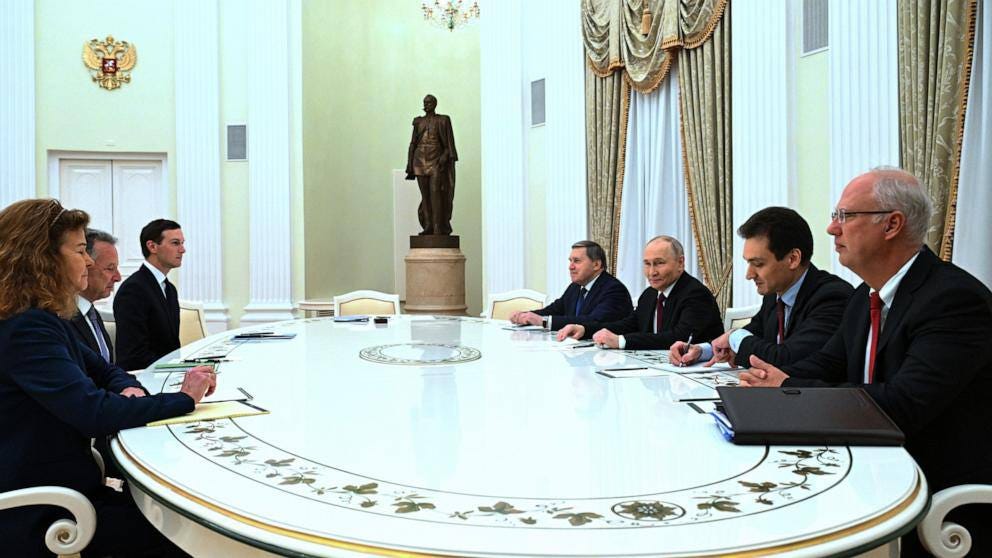
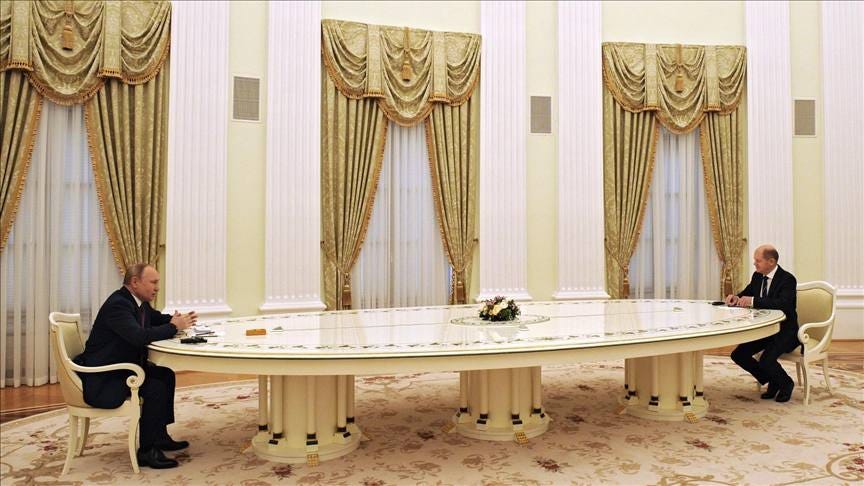
If you don’t believe me just contrast how President Putin sits with European leaders versus how he sits with the Americans. Look at the body language.
Conclusion:
The historical record suggests that the current era of hostility is not an inevitability, but a consequence of specific ideological choices. For decades, the West pursued a policy of expansion and liberal-globalist conversion that disregarded the security concerns and cultural identity of the Russian state. This strategy has reached its logical dead end: it has not isolated Russia, but has instead midwifed a formidable Eurasian bloc led by Beijing, leaving the United States increasingly vulnerable.
Today, the emergence of an America First realism offers a rare corrective. By stripping away the requirement for ideological conformity, the United States can finally view Russia for what it is—not an existential evil to be conquered, but a vital land bridge power whose interests naturally conflict with a rising China and a rogue European bureaucracy. An alliance based on reciprocity would transform Russia from a cornered adversary into a strategic counterweight, securing the Western Hemisphere while stabilizing the Eurasian heartland.
As the Ukraine war is coming to an end, a new security framework must be reestablished, that which includes Russia, Ukraine, the EU and the United States, preventing future wars between the four.
Certainly, the Russian public opinion is slowly moving towards a pro-Western direction and it is within reason to expect that much the of Russian cultural milieu would become Americanized as a result of this alliance much like the Russian Empire became Westernized as a result of deep partnerships with other European countries. Russia that imagines itself in an alliance with Americans will be much easier to hold than Russia that is thinking of itself as an independent and hostile anti-Western state.
As the window to fracture the Sino-Russian axis narrows, Washington must choose: continue the cycle of hostility, or pursue a bold realignment that brings Russia back into the Western fold. The recent comments of Russian officials confirm that they are very much open to an alliance, which will eventually lead to the re-Westernization of Russia and restoration of peace on the European continent.
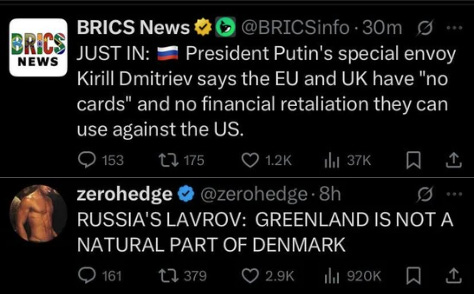
a northern hemispheric alliance is long overdue. the best time to create one was 1992. the second-best time is today. US+RU controls 90%+ of the global nuclear deterrence and ~30% of oil and gas production. US+EU+RU is >50% of global GDP. further elevating china while allowing the global north to fall apart would be the defining strategic blunder of the 21st century. one the defining strategic errors of the 20th century was normalizing relations with mao's china which turned out to be the genesis of america's most powerful adversary rather than "hippies with chinese characteristics" as was widely hoped at the time. miscalculations have consequences even in the absence of accountability. without a course correction, there may come a day in which europe regrets throwing away its entire civilization to protect the territorial integrity of the post-1954 ukrainian ssr just as the british sacrificed their global empire in the 1940s to protect the territorial integrity of another slavic phantom state. the world order has been remade many times. the realities of the world we see today warrant a new world order shaped by pragmatic calculations about civilizational survival rather than idealistic fantasies.